Sunday, April 06, 2008

72 again

A couple of weeks ago I was worried that I was running out of decent chess videos to use on Sundays. Fortunately, a rummage down the back of the sofa produced today's links.

Normally I prefer to use embedded videos but am willing to make an exception if it's worth it. Dr. Who, for example, was always going to make the cut regardless of the format and this time around we have a really good documentary on Fischer - Spassky, 1972. It's obviously a few years old (Fischer is reported to be living in Hungary) and you might not learn anything you didn't already know but there's some incredible archive and some people who were around at the time, Spassky, Krogius, Baturinsky and others, telling it how it was.


The first part is about five minutes long, the other three around ten minutes each.


Saturday, April 05, 2008

I dreamed I saw St Augustine


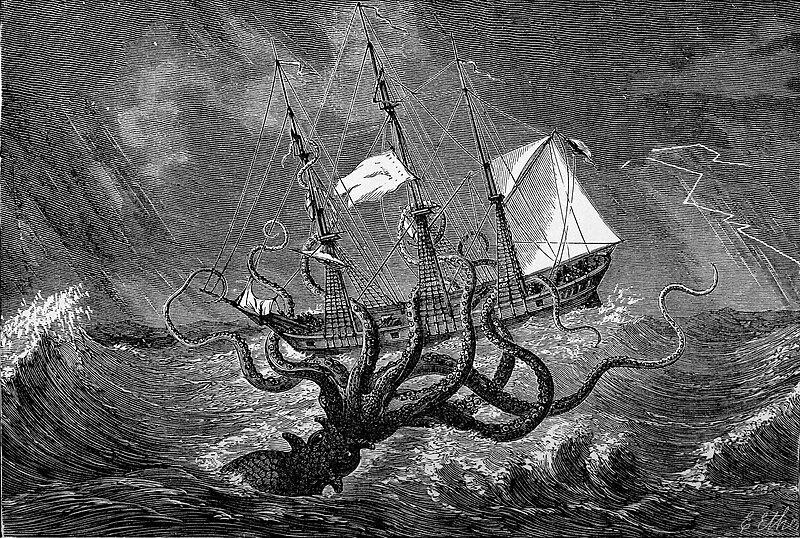
Quiz question: Which British chessplayer once organised an expedition to Bermuda to try and film the legendary and entirely non-existent giant octopus known as the St Augustine Monster?

Friday, April 04, 2008

Tom Chivers Unplugged

Is chess a sport? That's a question I've wavered on indefinitely all my life, but an incident last Thursday night after my London League game at Cavendish Chess Club has definitively swayed me to one answer, and one answer only. My opponent that fateful night was Stewart Reuben, and after our exciting draw, during our postmortem, I suddenly realised that I was unable to extract my left earplug. This has never happened to me before, and although I normally put them in quite a way, they have never seemed dangerously deep. Probably what happened was that the way I had been chewing gum had coaxed the thing further into my auditory canal than usual, to a point that fingers could no longer grasp, I supposed as he pointed out various moves that I had missed.

Afterward I tried this and that on the way to the tube - pinching at it with my fingers, holding my nose and blowing, hoping the pressure would force it back up - but to no avail, and in the end I decided to go to A&E at UCL in Gower Street, where I arrived at 10.45pm to find a crowded waiting room. At 11.30pm a nurse in a blank sort of mood saw me, and said I would have to join the queue to see the Doctor who would try to take it out with tweezers. And if that didn't work, suction. I asked her if she might try herself there and then, but apparently not.

Two hours later another nurse saw me - Gary who stank of cigarettes and who looked like he'd started to withdraw from nicotine the moment he last stopped chaining - and he took it out in about a minute, and then got a Dr who looked about twelve years old to check my ears. Said Dr looked at the ear-inspecting-device (later, I found out, called an Otoscope) like he'd never seen one before, and possibly he hadn't. He looked in my left ear, manoeuvering the thing this way and that, issuing sighs like a child confused in junior school at his first trigonometry lesson. Finally it struck him to look into my right ear to check how an undamaged ear should actually look, and he swapped the Otoscope back and forth comparing them, concluding that no damage had in fact been done on the left, on the basis of symmetry.

It was 1.30am then, or so, and I jogged the mile or so across town from Euston to Holborn to just catch a night bus, getting back around 2.30am to the flat and a wide-awake and instantly-relieved Sarah (my girlfriend) who'd got my message explaining I'd be late and why ... a voicemail that nonetheless failed to save her from a long, worried wait. Still - aside from my survivial with hearing intact - the silver lining from her point of view is yet another arrow in her quiver of arguments in favour of me getting myself a mobile phone (I phoned from the hospital reception) but, I digress.

Of course it was a shame that the first blank nurse couldn't have just plucked the thing out there and then. When the second nurse did so two or so hours later, nurse number one actually popped her head in as he held the tweezers in hand (longing for them to be a cigarette, no doubt) and stated in a blank, indifferent sort of way, that she was surprised to learn the earplug was still visible, i.e. reachable by tweezers and not in need of suction, and hadn't fallen further in due to my long wait. Caused, of course, by the fact she wasn't willing to take it out herself two hours earlier.

Still, given how busy and in some cases unpleasant the waiting room was, it is not hard to understand why they don't make cheerful individual decisions, why they have a system they stick to, why I didn't get rushed through, why they all looked rather frazzled. (Except for the twelve year old Dr, who looked extremely excited - a shiny device there, the inside of an ear here! - as if he was off seeing brand new things on a school day trip. Perhaps he was.)

Drunks, you're probably thinking, and indeed there were three drunks, each unpleasant in their own way. One plonked in a wheelchair in the centre of the room, snoring away, eventually wetting himself massively without noticing. Another came in, cornered a confused family and their distressed daughter (younger even than the Dr; ten years old maybe) whom he started lecturing incoherently on the dangers of smoking. Finally one had obviously fallen down or been in a minor fight, but his injuries didn't amount to much... yet he refused to leave the waiting room and go away after having been seen, despite repeated requests to do so. "Give me ten minutes, wankers... I need to get my stuff from over there, wankers..." Two security guards eventually did a good job of manhandling him out of the building.

Of the many other unfortunates that night, the one I felt worst for was a guy who came in about an hour after I'd been there. Mid-twenties, effete, quietly spoken, a few cuts around his face, shaking a little, I heard him tell reception how he'd been beaten up by somebody he knew - but he didn't want to go into more details about that, he really didn't, except that the person had repeatedly stamped on his ribs and he was struggling to breathe as a result... Despite trying to hold himself together mentally and physically, despite trembling on the edge of tears, despite the wincing and the wheezing, there he was, determined to protect the person who did this to him. Pretty tragic and upsetting to witness, of course a million times worse for him. Still, they rushed him through, and I didn't resent my wait (as I mentioned before) but nonetheless, I digress.

And so, in conclusion, my experience has at last convinced me that chess is a highly physical sport, replete with the potential for injury that proves it.


Thanks to Martin Smith for the title of this post. For another late night after-the-games adventure, see this post too.

Thursday, April 03, 2008

Out of order

When I moved to London at the start of 2002 my first digs were in Acton. I left there after six months and moved to Brixton. This led me to wonder whether, when I next moved, I would be obliged to go to Camberwell or Croydon or Camden, in order to preserve the alpahbetical sequence. As it turned out, I skipped C completely and went to East Dulwich, thus getting both the D and E at once, but in the wrong order.

The first time I missed a win against an International Master, my opponent was Jacob Aagaard. The second time, it was Vlastmil Babula. To be honest it wouldn't much surprise me if I missed twenty-six wins against International Masters, working my way right through the alphabet, and never ever won one. However, I may have to chalk them off out of sequence, like a trainspotter does, since I have leapt over the next four letters of the alphabet and landed on G. G for Sergio Garza, the IM who I played, and should have beaten, in Zaragoza on Saturday.


20...c4! ,which I played, was a good move. 20...Qxe3+!?, which I did not, may or may not win, but after 21.Qxe3 Nxe3 22.Rd7 Bd5! 23.Rxe7 Bxb3 24.Rxc5 White has a certain amount of play for the lost pawn.


A certain amount, although of course Black is better (the strong square on d5 as well as the pawn) and of course White is fighting for a draw. However, it wasn't the compensation that led me to reject this line - it was that I overlooked the 22...Bd5! idea, saving the piece that 22.Rd7 seeks to win.

I did spot that 20..Nxe3?? loses to 21.Bg3, and that's how, looking around for a way to strengthen the capture on e3, I found 20...c4! which seeks to create a fork when the knight lands on e3. It also, as it happens, blocks the c-file, which is a big advantage after 21.Bxc4 Qxe3+ 22.Qxe3 Nxe3 23.Rd7 Bd5! and now if 24.Rxe7 Nxc4!


This is a better version, for Black, of the previous diagram, with White's c-rook in a weaker position and Black's pieces in stronger ones. It would still take some winning, of course, but I think it is a won position.

It's not what I played: having missed the ...Bd5 theme, I didn't see how good the queen capture was for me. Why, however, I played the knight capture instead, 21...Nxe3?? losing for exactly the same reasons as 20...Nxe3 - reasons which I had already seen - I don't know. "Time-trouble", said my opponent after the game, but it wasn't. I had eleven minutes left after 20...c4. Time enough, I think. Time enough to see something that I had seen already.

Thnking about it while writing this, I suppose that if I'd seen the ...Bd5 theme, I'd have played it the first time round, rather than looking around for something else and finding the ...c4 idea. The discovery was the consequence of missing the very idea that makes that discovery strong. Still, the fact remains - the idea was there, and I could have seen it, and I didn't.

So another one passes me by: that's three, or four if we count the slightly different case of the man I beat who should have had his IM title but did not.

Oddly, I've had the black pieces in all three games where the wins have passed me by. Perhaps, though, not so oddly. I think masters generally play within themselves when they meet club players, not taking tactical risks, expecting the club player to play unsoundly, to expose their lack of opening knowledge, to make it relatively easy for them. But, with the black pieces at least, I don't often do that - I tend to know what I'm doing in the opening and I tend to play with a degree of self-discipline against a stronger player. (It's different with White, partly because I know and understand less about the opening, partly because the game is less amenable to following your opponent's ideas and aiming for equality. The pieces are, in a sense, set up differently.)

So I tend to get a decent position and sometimes - sometimes - that makes the opponent nervous, or impatient, and then they take the risk and try to force an advantage where there's none to be had. Which is our opportunity: like a football team choosing to defend, withstand the pressure and wait for their chance on the counter-attack.

But you have to take your chances - and I don't. Because when the time comes there are complications, and I don't play the complications at all well. (In truth I play them not only badly but, as I did on Saturday, irrationally.) So we have a pattern: if not an alphabetical pattern then a thematic one. Self-discipline, good position, good chance, good chance not taken, blunder. It's going to keep me awake at night. It's going to keep me awake at night until I win one.

Wednesday, April 02, 2008

Miss Easy Tactics! with Justin VI

[Our pedagogical series in which we look at a portion of a game I played the previous weekend in which some obvious tactic is overlooked. Readers are invited to practice their skill by seeing if they can spot what was missed.]


IM Sergio Garza v Justin Horton, Aragón Team Championship 2008, position after White's 20.Bd2-e1. Black's nineteenth captured a pawn on e5 and White had overlooked that after 20.Nxc5 Bxc5 21.Rxc5 his b2 pawn would be hanging. But now, of course, the e3 pawn is hanging.

Question 1. What happens after:

(a) 20...Qxe3+ ?
(b) 20...Nxe3 ?
Question 2. The game actually proceeded 20...c4 21.Bxc4. Now, what happens after:

(a) 21...Qxe3+ ?
(b) 21...Nxe3 ?
(The game and some comments will appear tomorrow. Quite likely there will also be remarks in the comments box today. You may take it that at least one wrong choice was made by the author and that his quest to beat an International Master remains unfulfilled.)

Tuesday, April 01, 2008

White to Play ...

... and mate in one *


Alternatively, you may prefer our effort from last year.


* From:
Raymond Smullyan's The Chess Mysteries of Sherlock Holmes


[edit 2/4/08: The Diagram is now, finally, correct - with thanks to SwissGambit of RHP.

Monday, March 31, 2008

Club News, Update!

Welcome again to our fortnightly round-up of club news. Starting off this week with...

The Surrey League

... which for Streatham & Brixton Chess Club finished on Monday March 17th with a disappointing 6-2 defeat at the hands of a very strong (Grand Master Neil McDonald on board 1, average grade in the 190s) Redhill side. Still, our season tally of 6/9 is not at all bad and currently leaves us second in the table, although with other teams still with games in hand, perhaps fourth looks a more probably finishing spot.

Perhaps modesty ought to forbid, but Team Captain Angus has declared the present writer his "Player of the Year" in the Surrey Competitions (the League plus Cup) thanks to my overall score of 9/10. That flatters my play rather more than a close examination of my moves would (remember this?) but nonetheless, here to play through is probably my best game from the season in the Surrey League:

A strategically consistent game, albeit with only one strategic idea in it.

The news from ...

The London League

... is not so good, at least as far as the second team is concerned. Mushrooms 2 picked up a point from one of their adjourned games against us, which brings them to 5½ points from that match and overall victory. This meant the match on the 26th to Woodbridge (our nearest relegation rivals) was crucial to our survival or otherwise in Division 2, and it current stands 4-4. But looking at the League Table, I believe their superior game points means that even if we win the two games remaining from that fixture, the only chance we have of finishing ahead of them is if they default an improbable number of boards in their one remaining fixture! Nonetheless, we play chess not just to win but to learn as well, and a tough season in a tough division has provided us with plenty of good games, even if we weren't on the winning side of just enough of them.

The first team, meanwhile, has played one match since our last report, against Cavendish 2. The match stands 4-3 to us, but with 5 unfinished. Currently sat seventh in the table, a win from this match and from our final match against Mushrooms 1 would probably secure us a finish in the top half this year.

Finally, two brief adverts, the first for ...

The Trost Trophy

... a fun ten second buzzer tournament, which is being held at Crystal Palace Chess Club tonight from 7.45pm. First prize is £30, entry £2, and the format aside from the unusual time system will be a six round swiss. The Crystal Palace website is here.

The second for...

The Surrey Individual Tournament

... which will start in the week commencing 28th April 2008 (the deadline for entries is Monday 14th April 2008) and which consists of three or four evening games per month with up to nine games in total. Provided there is a sufficient demand, players will have a choice of venue as follows: Wimbledon (Monday), Ashtead (Tuesday), South Norwood (Thursday) and Surbiton (Wednesday.) Entry is £15 and further details are available from Paul Archer.

Sunday, March 30, 2008

King's Head rapidplay

The 31st King's Head Rapidplay is being held next Saturday, 5th April, over in Porchester Road, Bayswater. Kick-off is at 11am.

The total prize fund is £700...

First: £250
Second: £100
Third: £50

with six grading prizes of £50.

Your author, who does not expect to be troubling the organisers for any of the above, has not played a tournament (rapid play or long play) for many years but intends to come out of retirement for this one.

The entry fee is £20 if you enter in advance with a £5 late fee if you turn up on the day.

Entry form available here.

Saturday, March 29, 2008

They don't like it up 'em


[Top picture from Chesshistory.com]

Friday, March 28, 2008

Fact: All Serial Killers Play Chess

Regular visitors to the S&BCC blog may recall that about six months ago we blogged a story about The Bitsevsky Maniac - a chessplaying serial killer in Moscow who may, or may not (reports vary) have counted his victims by placing coins on a chessboard.

It seems we now have another chess-loving serial killer on our hands. Earlier this week one Michel Fourniret went on trial in France after apparently confessing to the murder of seven women over a fifteen year period ending in 2001.

We learn from yesterday's Independent that Fourniret is "... a man who likes to play mind games with investigators". Perhaps not surprising, then, to find the Guardian reporting that like the aforementioned Mr. Maniac, Fourniret is a "keen chess player". You may prefer the Times' description of him as a "bespectacled chess player" but in any event, the link between chess and, as Sherlock Holmes would have it, a scheming mind, seems firmly established. Or maybe not.

I have my doubts about the significance of chess to this story. Fourniret, you see, does not have a FIDE rating. That doesn't mean much in itself, I don't have one either, but Justin* has discovered that there's not even any mention of him on the Federation Francaise Des Echecs list.

Justin has also unearthed an article by Bert Peeters, formerly of the University of Tasmania, who writes about the case. Unfortunately it's in French which is none too helpful for either of us but we managed to get it translated** and we now know that Fourniret,

  • taught several people to play chess including two young girls who lived near to him at the end of the 1980s;
  • has been a member of a chess club;
  • was allowed to have a chess computer in his cell when he was in prison in Belgium,

which tells us nothing whatsoever about how good a player he is of course. We don't for example, know how often Fourniret visited the chess club nor even what kind of organisation it was. Was it a club in the sense that S&B is a CC or was it something more casual? A chess cafe perhaps.

There are, I'm sure, many people in the world that consider themselves to have a strong interest in chess and yet don't have an official rating or even regularly attend a chess club. It would, however, be unlikely that, in those circumstances, they would be much good or that chess would play sufficiently large a part in their life as to make it reasonable to consider it crucial in understanding their psychological makeup.

In any event, Peeters considers the evidence of Fourniret's interest in chess then concludes,

“These details at first seem not very significant but they have been emphasised in the press on several occasions ... they have contributed to the stereotyping of the serial killer.”

So there we have it. The British press have just picked up on some crass analogies bandied about by their European counterparts (and, it seems, French prosecutors) and chosen to present the story in a way that sounds good. This kind of thing always seems strange to me but then I'm not a journalist and am therefore free of the convention that requires any old toss that happens to have been reported elsewhere to be presented as fact.

I do wonder, though, why the newspapers bother with this chess and murder stuff at all. Agatha Christie does it so much better.


* Many thanks to Justin for his assistance with today's post.
** Translator Mrs E.C. Bryant - thanks mum. :-)

Thursday, March 27, 2008

The Immortal Draw?

Our two recent posts on King Hunts reminded me of a remarkable game I had stored away in my memory as The Immortal Draw - a romantic effort on a par with The Immortal Game and The Evergreen Game, I supposed.

Here it is to play over now:


Without a doubt, the game contains many memorable moments: the surprise of the black bishop, queen and knight sacrifices; the way the white king gets caught up in enemy territory, a minefield demarcated by pawns, revealed by variations featuring such unusual mating variations as 17.Kxb7? Kd7! threatening ..Rhb8 mate, and 18.Ka4? Bc4! threatening ...b5 mate; the massive white army sat immobile on the first rank, watching uselessly on. Equally curiously, the line has a certain amount of theory associated with it - similar games and analysis can be found at here at Chess Games. And in fact chess databases will tell you that the entire game has been since replicated identically more than once, presumably as part of prearranged draw pacts.

So is Carl Hamppe versus Philipp Meitner, Vienna 1872, universally agreed amongst chess players to be The Immortal Draw, to be anthologized as such, on a par with all the well-known greats? Unfortunately, it seems not. It turns out Chess Games named the game as such when they featured it as their game of the day in January last year, and whilst Google suggests not much competition for this crown, with only six hits for the phrase support is thin on the ground too.

Still, I think the game deserves to be better known, and I hope you have enjoyed getting to know it a bit. Comments about the immortality or otherwise of this effort are welcome, as are suggestions for alternative claims to the title of Immortal Draw.

Wednesday, March 26, 2008

Learning to Love Robots

Yesterday Simon Ings had an article published in The Guardian that claimed, amongst other things, that"the human tendency to anthropomorphise will allow automatons to become part of society". I bring this to your attention because he chose to open his piece with the following:-

"London, 1977: the international grandmaster Michael Stean is losing to Chess 4.6, a computer programme developed at Northwestern University, Illinois. Stean is steamed: he is losing. Chess 4.6 is, he says, 'an iron monster'."

I've always thought Stean had called his computer nemesis a 'bloody iron monster'. I may be wrong - when I googled the phrase all that came up was the page that contained my own comment to an S&BCC Blog post from July last year - but it wouldn't be unlike the good old Grauniad to edit out a very minor swear word (is it even that anymore?) after publishing a See You Next Tuesday * on the same page less than two weeks previously.

Anyhoo, towards the end of the column Ing mentions a book, Love and Sex with Robots, written by "chess international master" David Levy.

"Now in his mid-60s, Levy is bringing aritificial life to sex. 'Humans long for affection and tend to be affectionate to those who offer it', he says, and predicts that prostitution has only another 20 years to run before robots take over. Robots with credibly human bodies are already here. Add minds clever enough to handle a little language, and how could we possibly avoid loving them?"

One can't help but feel prolonged exposure to Raymond Dennis Keene has rather warped Levy's view of the human form but still it's nice to know he's found something useful to do with his life after the rather unpleasant end to their business relationship.

Should you be in the mood to rush out and buy the book, I'm afraid you'll have to calm your self for a while. The paperback version won't be published until April but you can always pre-order it.

Patience dear friends, patience.


* Yes, I am aware of the contradiction in employing a euphemism for "cunt" immediately after poking fun at a newspaper for cutting "bloody". It's irony don't you know?

Tuesday, March 25, 2008

The ultimate ultimate blunder


Tim Krabbé, the Dutch chessplayer and novelist, has on his website a feature The Ultimate Blunder, in which he has collected 35 different examples of players resigning in positions they were winning. He calls this "the ultimate blunder" and it's hard to quarrel with the description.

The ultimate ultimate blunder, presumably, would be one in which a player resigned having mate available on the move, and, through the kindness of our good hearts and a contributor to our comments box, we're able to provide readers with this very specimen, this very day. It was sent to us last week as a comment on the latest in our series The Worst Move On the Board, claiming to trump all other contenders, even, for that title.

For me it doesn't qualify under that rubric, since resignation, by definition, isn't a move: it's a refusal to make any more moves than one has already. But it does fit Krabbe's criteria and, it seems to me, cannot be bettered. White had mate in one: not seeing it, he preferred to resign instead. You can't get any more ultimate than that.

The position at the top of the column is from Anonymous-Crews, Evening Standard, approx 1981. Play continued from the diagram 1.Qh4 Nf1 leading to the following position:


White has mate in one available (I'll not insult your intelligence by pointing it out). But the move was never played - and nor was any other, since White saw fit to resign in the face of what seemed to them to be inevitable defeat.

Magnificent. Naturally I would have preferred the victim - who will remain anonymous unless and until he or she wishes to be otherwise - to be Nigel Short, but magnificent nevertheless. I cannot ask our readers whether they have done any better, since no better than this can possibly be done. But I can ask - can anyone match that?

Monday, March 24, 2008

King Hunt II

We're returning to Nunn and Cozens' The King Hunt today and another example of a king chop from a player not using the opening that bears their name.

It's Matschego-Falkbeer, Vienna 1853. Same format as on Friday - try to work out the mate from the diagram. Scroll down for an easier version or if you just want to enjoy playing through the game.


Hard


.
.
.
.
.
.
.
.
.
.
.
.
.
.
.
.
.
.
.
.
.
.
.
.
.
.
.
.
.
.
.
.
.
.
.
.
.
.
.
.
.
.
.
.
.
.
.
.
.
.
.
.
.
.
.
.
.
.
.
.
.
.
.
.
.
.
.
.
.
.
.
.
.
.
.
.
.
.
.
.
.
.
.
.
.
.
.
.

Easier


Sunday, March 23, 2008

Let's Play Chess

I've been having a nose through my bank of chess related video clips and, frankly, they're all a bit rubbish.

Well all except this one ...


I'll have to scout around for some more. If you know of any that aren't already in our goggle box index (currently up to date for a change) do feel free to let us know.

Saturday, March 22, 2008

Dodgy diagram


VV Osnos, Debyut Reti, Fizkultura y Sport, 1990. Page 244.


[The first in an occasional series]

Friday, March 21, 2008

King Hunt

Are you bored stuffing your face with chocolate eggs yet?

If you want a break between binges try working out this mating puzzle. It's taken from John Nunn's updated version of William Cozens' The King-Hunt. Petroff will be famous for ever more for bequeathing the chess world an opening with a reputation for extreme boredom. He could certainly play more energetically if he chose. Consider today's game - a casual encounter played against Hoffman in Warsaw 1844.

See if you can work out the mate from the diagram. If you're keen you'll find the mate that Petroff played in the game and another line that could have extended the game by a further four moves.

It's not so easy, certainly far too tough for me, so if you prefer you can scroll down a bit to find a position closer to the end of the game ... and if you really can't be arsed you can scroll all the way to the end and just play through an enjoyable game. That's what I'd do.

Happy Easter.


[edit: it's probably obvious from the diagrams but I've just realised I forgot to make clear it's Black to play and mate]

Hard


.
.
.
.
.
.
.
.
.
.
.
.
.
.
.
.
.
.
.
.
.
.
.
.
.
.
.
.
.
.
.
.
.
.
.
.
.
.
.
.
.
.
.
.
.
.
.
.
.
.
.
.
.
.
.

Easier


Thursday, March 20, 2008

Being Robin Haldane


I played my first game in the 4NCL last weekend. For the time honoured reason that they were a player short and I was available at short notice, I turned out for Celtic Dragons II. If truth be told, I don’t have much of a connection with anything even remotely Celtic. I am rather partial to Sainsbury’s Leak and Potato soup, which I suppose combines the national foodstuffs of both Ireland and Wales, but that’s about it. Still, given the number of S&BCCers who play for the Dragons I didn’t feel too out of place.

A while back I pondered the question of whether our choices of opening variation reveal much, if anything, about our personalities. The Celtic Dragons v Grendel’s Mother match certainly provided me with a bit more ammunition for my thesis.

Within fifteen minutes of kick-off Robin had sacrificed a rook and a knight and even managed to land his queen on h5 with. I, on the other hand, was busy fianchettoing both bishops while, rather boldly I thought, playing my knights to bishop three.

Three hours later, and that’s a good hour and a half after Robin’s opponent had been forced to resign by the way, my game reached the diagram at the head of today’s column. My young opponent, evidently not fancying his chances in the bishop and knight ending we had reached had actually given up a pawn to swap off our last remaining minor pieces to get this position. As soon as the exchanges had been completed he reached into his bag then brought out a couple of rounds of foil wrapped sandwiches – a bit of a clue that he was settling down to play this one out to the end. I'm sure this was not through rancour or cussedness. I think he genuinely believed he might have drawing chances and just didn’t realise White now wins in exceedingly trivial fashion.

Having concluded that the game was going to be continuing for a little while, and yet was safely beyond even my capacity to muck things up, I asked myself the question that can aid us all when faced with a dilemma at the chess board…

What would Haldane do?

In a few more moves I was able to put my answer into action.

33. b4 a6, 34. a4 e5, 35. e4 h6, 36. b5 axb5

Essentially, there are three ways to win this position,

(a) take back with the pawn, zugzwang (I use the word as a verb for the benefit of our American readers) the king off the b-file then queen and mate – this is what Fritz wants to do;
(b) leave the extra queenside pawn to its fate by marching the king East to chomp all of Black’s kingside pawns – probably the method I would have employed until now;
(c) The Haldane option.

I’d decided on (c) back when I’d realised my opponent was intending to play on to the bitter end.

37. Kxb5 Kb7, 38. g4 g6, 39. a5 h5, 40. gxh5 gxh5, 41. h4 Ka7, 42. a6 Kb8, 43. Kb6 Ka8, 44. a7


This is the point of course. Black's one legal move will allow White to march a pawn up the board, eventually promoting to mate the king in the corner.

44. ... f5, 45. exf5 e4, 46. f6 e3, 47. f7


And now, rather miserably I thought, my opponent resigned.

I showed Robin the game while we were waiting for the others to finish. I told him I was very disappointed that my opponent resigned when he did.

Robin: “Out of interest, how would you have promoted?”

Me: “Rook of course.”

I had answered correctly and Robin smiled in the manner of a master who realises his pupil has learned a fundamental lesson.

I felt proud and went on to express my amusement at letting Black get a pawn one square away from queening before I delivered mate. It didn’t take long, though, for my illusions shattered.

Robin set up the zugzwang position and pointed out a huge improvement on my play. After Black plays 44. ... f7-f5 White has,

45. f4!!


and now, aside from the aesthetically pleasing pawn formation, whichever way Black captures White pushes the other pawn. Black gets to queen a pawn, a hair away from promoting with check no less, before losing his king. True this variation is a tempo longer than the game but a Haldane cares not for such things.

45. ... exf4, 46. e5 f3, 47. e6 f2, 47. e7 f1=Q, 48. e8=R mate

Perfect.

So I can't claim a Haldane-esque finish for the game but perhaps I shouldn’t feel so bad. After all, despite Magnus Carlsen’s claims to the contrary there can only be one Robin Haldane.


You Are Haldane
Haldane is Haldane

Wednesday, March 19, 2008

Five in a row

After his victory in Gibraltar the charming Mr Nakamura was in the news again alleging that another grandmaster (Rauf Mamedov) had deliberately lost five online blitz games in a row to Alexander Grischuk, thereby allowing the latter to overtake Nakamura's record as the player holding the highest ICC rating, a much-coveted distinction if only in the wall-pissing stakes.

It may be that Mr Nakamura finds it difficult to comprehend the very idea of losing five games in a row and as Ulf Andersson once apparently remarked that he couldn't really understand how it was possible to lose at all at correspondence chess, perhaps he has a point. Most of us, however, only find it hard to imagine winning five games in a row. The other way round is all too easy for us to grasp. In correspondence, blindfold, blitz or just the ordinary form of chess. I've done it. I've probably done it more than five times, come to that. And certainly I've done it against the same opponent in a series of blitz games: I wrote about it a couple of years ago.
I once played a chess tournament in Stroud with a clubmate of mine, Jesse Kraai, who was from New Mexico but was in England to study. During a break between rounds he made me a bet that he could beat me in five consecutive blitz games, a pound per game: and although he was a better player than I, he would even the odds by taking time off his clock every time he won a game. The first game would be played at five minutes apiece, but if he won it (as he did) he would play the second with four minutes, the third with only three and so on.

So he played the second game with four minutes, the third with three and the fourth with only two, and each time he knocked me over. The final game he played with what seemed to me an impossible one minute on the clock: how many moves can you play with only one minute to make them all and your opponent simply needing to avoid checkmate before your flag falls?

But Jesse had had his upbringing in American chess, where blitz play (and, for that matter, blitz for money) was far more common than it was here, and he knew how to stretch his sixty seconds by using my my time as effectively as he used his. A crowd had gathered as the sequence of games progressed and by the time that Jesse delivered mate and I handed him his fiver, there was shouting and cheering all around the board. If they had been any more excited, they would have picked him up and carried him on their shoulders out of the playing hall and into the streets.

Tuesday, March 18, 2008

The Worst Move On The Board IV


Dozy of me: I first saw this position a few weeks ago but it didn't occur to me until reading it again in New In Chess that it was a contender for this series.

Bu Xiangzhi v Hikaru Nakamura, the first place play-off at Gibraltar - the second game of two, Nakamura having already won the first one. Here, in the second, he has constructed a fortress that should get him a draw and win him the tournament. Even so, there's one move available to White that's distinctly worse than all the others: and he found it.


Worst Move I
Worst Move II
Worst Move III