Saturday, March 16, 2013

He Might Not Have Been Amused IX...

..or, What Made Lowell Cross? another post on the (mis)fortunes of chess in the art world, and a double dose of Marcel Duchamp (1887-1968), prompted by the current exhibition of his work, The Bride and the Bachelors, at the Barbican (on until the 9th June). The exhibition's title reprises that of Duchamp's game-changing construction aka the Large Glass of 1915-1923, and playfully alludes to the other artists featured in the exhibition: John Cage (composer, d. 1992), Merce Cunningham (choreographer, d. 2009), Robert Rauschenberg (d. 2008) and Jasper Johns (b. 1930, both visual artists).

The exhibition is a chance to see some of both Duchamp's great chess-themed, and his non-chess works. This includes a full-size (it stands 9 feet high) remake of the Large Glass itself, which we discussed in an earlier post.

The Bride Stripped Bare by Her Bachelors Even (The Large Glass) 
(1915-1923)
©Philadelphia Museum of Art   
On the face of it, this is in the "non-chess" category, though as we saw previously it has been argued otherwise. The version at the Barbican, a copy authorised by Duchamp's wife Teeny in 1991-2, doesn't reproduce the hairline fractures suffered by the panels of the original (seen above). Duchamp reckoned the damage to be a fortuitous enhancement, and didn't have it repaired; perhaps he liked the idea that the glass was crazed. Virgo intacta or not, the bride lurks in predatory pomp in the upper section, while the bachelors wet themselves, so to speak, down below. The Barbican has illuminated the cranky drama with judicious spotlighting overhead and an explanatory key on the wall adjacent.

In one section of the exhibition, headed chessically "Exchanges", you can see some Duchampian chess miscellania not often on public view over here, in the main on loan from the Philadelphia Museum of Art's considerable Duchamp collection. For example, there's a pared-back etching (dating from 1965) preparatory to the well-known quasi-cubist Chess Players painting of 1911.

The painting of 1911  (courtesy: http://www.philamuseum.org). The etching of 1965 (in the Jasper Johns Collection, among others)    
On the right the stripped-down pair (his brothers) is a study of concentration, and a preliminary for the full composition where the flux of their mental engagement appears as if exposed to view. Copies of the 1965 etching, made from a 1911 drawing, were put to good use by Duchamp to help raise money for the American Chess Federation: an admirable gesture.
   
From the chesser's angle it is especially interesting to see the contents of the Box of 1932, evidence of the depth of Duchamp's commitment to the game. It is a collection of chess items: draft pages for, and a copy of, Opposition et les cases conjugées sont réconcilées on King and pawn endings produced with Vasily Halberstadt that year; a translation of a page of Nimzowitch's My System on isolated pawns; a position from a Duchamp game to illustrate "floating pawns"; a tournament cross-table from the 10th French Championship at La Baule in 1932 where he finished 4th equal with three others on 7.5/13, and so on; all with their cardboard container from the "Old England" department store in Paris. For another work, the Green Box of 1934, Duchamp also collected a miscellany of notes and drawings to explicate the Large Glass. So perhaps the chess Box is, by analogy, a homage to chess as art, a familiar Duchampian theme.

Maybe the essentiality of K & P endgames appealed to Duchamp: the way in which maximal outcome turns on minimal means, like one of his "ready-mades" - of which there are several in the show. But his Pocket Chess Set (1943) seems hardly to merit a case all of its own (even if you were to rate the incidental chess-pun on "pins") as it is pretty much just what it says on the tin, and lacks the queasy pink rubber glove that transformed the functional into the phantasmal in the version of 1944 (the original of which is said to be "lost").

Left from here.                    Right from here.
The gallery note about this part of the exhibition says that "here, chess is a metaphor for exchange, both personal and artistic" and Lowell Cross's Chess Set of 1968 is a case in point. Cage took chess coaching from the Duchamps, and he himself composed the chess pieces played in the aural dimension to this exhibition-with-performance-attached. Lowell Cross's construction generated sounds, and light, as the pieces were "played" (in the picture below by Cage, and Marcel just six months before his death; Teeny looks on) at a "performance" in Toronto 1968. "Oh, yes - there was a tremendous noise" as Duchamp said (quoted by Francis M. Naumann - see Acknowledgements), not noted for his musical ear.

From here
You can see the Lowell Cross Chess Set in the exhibition, sadly without any players. Happily the Barbican has now re-oriented the board to put the white square bottom right following a tip-off from your blogger on day two of the exhibition. Marcel might have been amused, and you might smile knowingly to yourself at this minor piece of hidden history if you visit. I wonder, though, whether the Barbican was right to ignore the additional observation that at Knight-odds the usual convention is to remove the Queen's knight (and not the King's knight). QN was surely the handicap that Duchamp conceded to his weaker opponents, as you can see in the above photo where the QN is off the board while he plays 2.Nf3. Marcel might not have been amused after all, nor Lowell Cross.

One element of the Duchampian mystique is that he gave up art for chess in his last decades, but Naumann casts doubt on this saying that Duchamp "was compelled to defend himself against the allegation that he had given up art in order to play chess, a claim that he either dismissed or vigorously denied..." and footnotes a quote from Marcel in 1963 "It is not true that I retired from painting to concentrate on chess...". The art world posthumously discovered that, indeed, in private he had still been at it, artistically speaking, in his latter years. The artwork that he had secretly created, the Étant donnés, emerged only after his death.

Perhaps the correct construction to put on his words is that he had always concentrated on chess, for which retiring from art (even if he had ever done so) wouldn't have been a necessary precondition. The Barbican note says, "his chess playing seems less a disavowal [of art - MS] and more of an expansion of the traditional conception of making art." If so, then, it seems to me, that famous line of his from 1952, "all chess players are artists", applies not only to you and me metaphorically, but also to himself at that time, literally. In the light of the post-mortem revelations it sounds as if, perhaps with a twinkle in his eye, he was dropping a heavy hint about what he was up to behind the scenes.

For anyone interested in the founding fathers of conceptual art the exhibition is well worth a detour, and while down that way why not pop into the nearby WW Gallery in Hatton Garden and catch up (until 23 March) with fellow Duchamp enthusiast Tom Hackney who we featured last year. He has a couple of chess paintings on show, including this work, in his now familiar style.

Tom Hackney (2012)
Chess Painting No 26. Duchamp v Znosko-Borovsky, Nice, 1931
You can follow the game here. The painting, with that exclamation at e7/f8, captures Marcel's domination of the encounter. But it ended in a draw, a fate we have all experienced. Here, too, he might not have been amused.

If you have not seen Tom Hackney's work before here is an explanatory extract from an interview with Aesthetica blog:
"I was also interested in Marcel Duchamp’s abandonment of art for chess – a ‘move’ in itself and something viewed as a direct challenge to the whole enterprise of painting. These elements combined, paradoxically, opened up a space for painting. Both activities (chess & painting) share an oscillation between the arenas of the eye and of the mind. The paintings are based on transcriptions of games played by Duchamp, the path of each move painted in sequence in white or black gesso." 
I like "oscillation between the arenas of the eye and of the mind" - it's a theme that plays out in another work in the exhibition (though a step away from Duchamp and chess), this time following a time-honoured tradition-cum-practice of re-producing, and interpreting, the works of great artists who have gone that way before. Here is Tom again (in a personal email) helpfully explaining what he is about:
"As for the colour piece, it's a small work on paper, that takes an existing colour chart painting by Gerhard Richter 1024 Farben (1974) as its basis. I'm working with pre-existing forms at the moment, so as to enable my input to be manifested more in terms of facture. In this case, Richter's original uses 1024 'randomly' generated and placed colours, and I have taken a printed reproduction of the work and overpainted it in colours to match those of the original as closely as I can. It's a very simple piece (hopefully not too simple) and I'm interested in how this method has the effect of looking at the original image though an irregular 'lens' that emphasises the body of the paint and how it's been applied. I think it relates to the chess paintings quite well as it perhaps uses Richter's painting like a gameboard, and plays with the logic of the original..." 
This is his 2013 Colour Chart no 5 (left) alongside the Richter's 1974 work:


You have to make allowances for the poor reproduction of Tom's piece into this blog, which has degraded its colour; also Richter's source work is oil on canvas, 96cms square, while Tom's is acrylic on paper at 20cm by 20cm. But you can still enjoy the subtle shape-shifting deformations on the left, and wonder how much the technical difficulty of the task defeated the intention, so that happy accident finds a place - not surprising if you've got 32 times 32 of them to get through. Standing up close in the gallery much of the overpainting of the underlying small-scale reproduction of 1024 Farben is apparent. Elsewhere it's difficult to tell, the optical distance between model and copy is "ultra thin" (as Duchamp might have said), and there is another game to play: are all the squares really overpainted?

Looking at the two grids you just have to ask: is each of the 1024 squares within each actually a different colour? Can the eye distinguish that many "just noticeable differences"? As between the two works you may, or you may not, prefer Richter's rectilinear rigour to Tom's informal dabbing. You could do a bit of oscillation, and ponder instead why your brain insists on seeking pattern in the randomness. I'm still looking, hoping for a white square bottom right.

Acknowledgements:
Thanks to Tom Hackney for sharing his thoughts, and for letting us show his pictures (Chess Painting no 26 has sold already). His website is here.  
For a thorough analysis of chess in Duchamp's art see: Francis M. Naumann (2009). Marcel Duchamp: The Art of Chess. readymade Press. New York. It was discussed in We Are Not Amused III (linked in the second para. above). Pages 49-88 in Naumann is Bradley Bailey's essay on chess in the Large Glass, and he also writes about it and chess here
Thanks also to Aesthetica blog. 

Chess in Art Index


Friday, March 15, 2013

How many wheels left on the AP wagon?


Singing a happy song


In just an hour or two the 2013 Candidates' tournament will be kicking off. The strongest tournament London has ever seen? Those sort of claims are usually obvious bullcrap, but this time around it seems a more than reasonable label. With Gelfand, Svidler, Ivanchuk and Grischuk as the bottom half of the field, what’s not to like?

Well, this being the chess world, there is of course a 'but'. As great as the chess promises to be, the tournament - or do I mean the Andrew Paulson bus? - does rather seem to have lost a wheel or two in recent days.

  • A week ago it emerged that the promised TV coverage wasn't going to materialise;
  • Unspecified and unexplained "budget problems" have been reported;
  • This URL no longer houses the official website;
  • Concerns have been raised as to what paying spectators are actually going to get for their money.

All this and Silvio Danailov's gleeful (if not necessarily accurate) tweet that the Lisbon Grand Prix has gone belly-up too. "AGON(Y) is about to finish"?  Maybe, maybe not, but at the very least it doesn't seem unreasonable to conclude that not everything is running smoothly in AP land.


"Paulson likes to talk to journalists", John Saunders assured us in a rather fevered interview published in CHESS a little while back. Perhaps not that much, though, if Our Man's radio silence over the last week is anything to go by.

Am I being unfair? After all he could have been unavoidably detained a half a mile up the road in a hidden cave for all I know. Even so, it would have be interesting to hear from the man who was going to be transforming chess into a spectator sport as to what the blinkety flip is going on. Anyhoo, captured by Cherokees or otherwise, Paulson eventually pitched-up safe and sound at the opening ceremony.  Pioneers never say die, eh?

So what do we have here? The prospect of a great tournament and a central figure who some are bending over backwards to present as the saviour of chess, but who may or may not actually live up to his billing.

Sheffield 2011 anyone?

Higgidy-haggady-hoggedy-hi. Perhaps we best strap ourselves in and enjoy the chess while we can.


Pause for thought

Today's post will arrive about lunch time.

In the meantime, don't miss yesterday's bonus post, CSC: The Newham Project - 19 pics and an interview with Malcolm Pein.


[UPDATE: Here's today's post - How many wheels left on the AP Wagon? - somewhat earlier than expected]

Thursday, March 14, 2013

CSC: The Newham Project


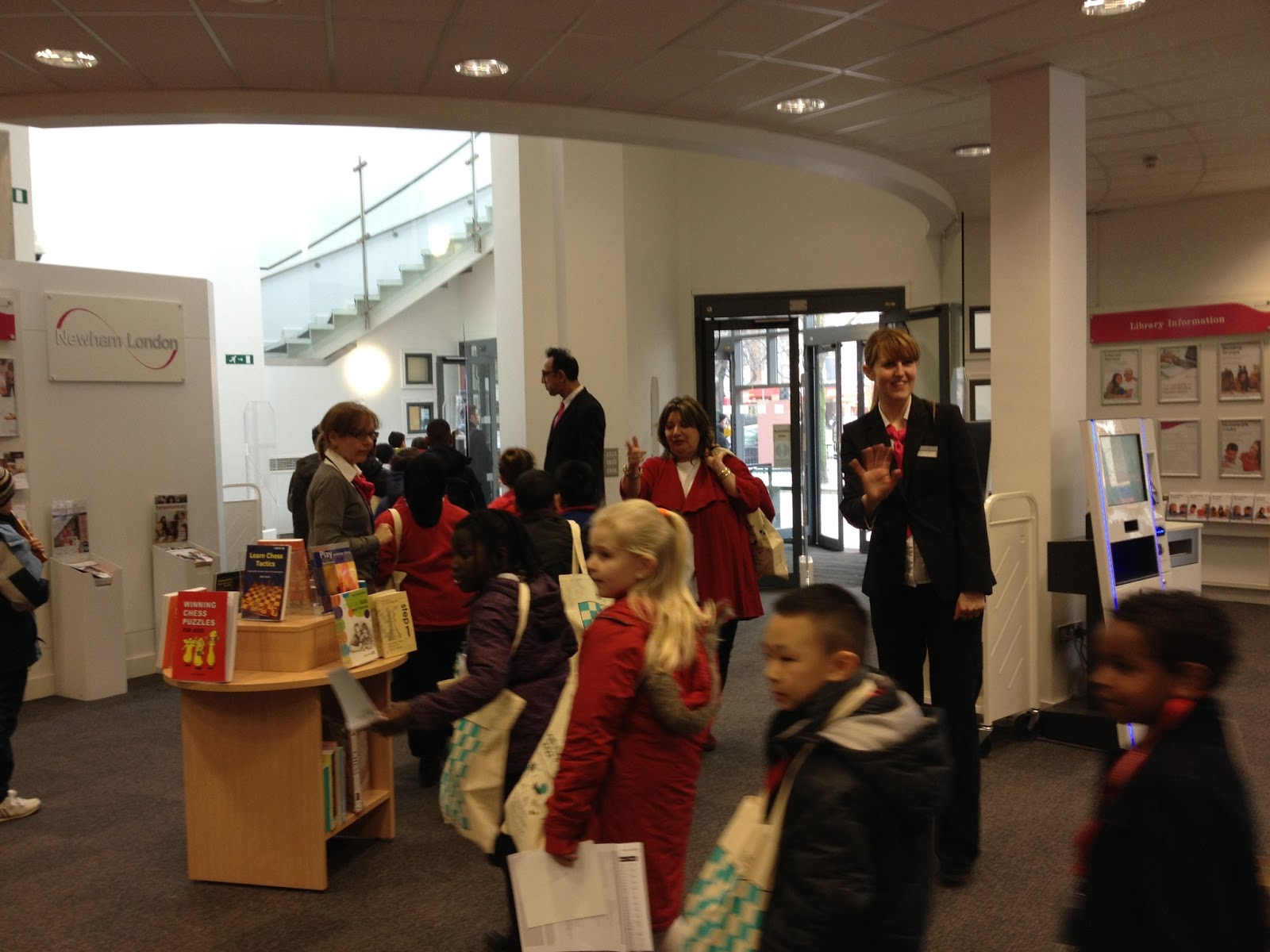
In non-Pope related news, there was a superb event at Stratford Library yesterday.  The joint operation from Chess in Schools and Communities, East Village London, Newham Council launched a programme which aims to introduce chess into every school in the borough. You'll find a pictorial report below, but we'll start with a quick chat with Malcolm Pein ...


The first time I saw Malc sell anything was at the British Championships in 1990. He was running the commentary room and doing a nice sideline in chess-themed t-shirts. He had three or four really good designs and the one I remember in particular had the picture of a tombstone engraved with "Caro Kann".

I mentioned this when we began chatting and at first he thought it must have been later as he hadn't set up his chess company until 1992. Then he had a bit of a think ....


Malcolm Pein:
When I started selling Chessbase which was 1984/5, I just decided to add one extra product line which were these chess t-shirts which were printed by an Englishman who lived in Alaska.

I remember now … he had the most wonderful designs.

JB:
So how did you get from selling that t-shirt to this event.

MP:
Well I suppose the seminal episode in my chess life – because obviously I was never really much of a player – was first of all when I met Frederick Friedel of Chessbase. I looked at Chessbase for five minutes and realised this was going to change everything and promptly decided that I’d better get the UK rights to it and sell it. I did that from 84/5 and I used to advertise it in CHESS magazine.

When Maxwell jumped off his boat I realised that CHESS was going to disappear and I realised that the only way I was going to keep my advertising going, and reach the chess public in the UK for Chessbase, was to get hold of that magazine. I picked up a few partners on the way. We bought Pergammon Chess & Bridge and one of the people involved wanted the publishing side so he took that and I took the magazine and the mail order business.

I did that for about 16, 17 years and then one day I got an email. It was one of these circular emails: so and so’s looking for a chess teacher. I thought OK - I was on the ECF’s coaches list.

I had a look at it. I looked at the email address it emanated from and I thought, “That’s interesting. That’s a very interesting email address.” I replied it to it instantaneously.

It was somebody who was buying chess lessons for his brother. And his brother turned out to be an incredibly brilliant man who ran a hedge fund. So I went to teach him chess. OK, I’m a pretty good teacher, but he’s just a very brilliant person. He became very good very quickly. And he was really enjoying it as well.

He actually knew one or two people - he knew David Norwood, he knew Ali Mortizavi - and one day he said, “what’s going on in the chess world at the moment”. This was 2008 I guess.

I said, “Well Anand’s playing Kramnik for the World Championship” and he said, “Let’s go.” I said, “Alright then, let’s go.” So we went. A few of us went.

He really liked that and when he came back he said, “Why don’t we run a world championship?”

I said, “Well, steady on.” I’d run lots of chess tournaments. I’d run Kramnik versus Fritz in Bahrain in 2002 and all sorts of other stuff.

I said, “Why don’t we run a really nice tournament first. So I can show you that I can do it. We haven’t had top class tournament in Britain for 25 years.”

He said, “Alright. Do a budget and tell me what it'll cost.”

It took me a week to get over the shock that this was actually possibly within my grasp. I gave him the budget. He said “That’s fine” and we had this wonderful London Chess Classic. The Classic I think exceeded everybody’s wildest dreams because we did it really nicely. There was an incredible atmosphere by adding all these side events and the giant sets and the schools ...

And so he said to me, “What’s missing in British Chess.”

I said, “British Chess is pretty much moribund. Very few junior prospects. We’ve got a federation" – the BCF as it was then – "that stands for Basically Cannot Function. We’ve still got some strong players" - we had Short and Adams and Luke McShane coming up - "If there’s one thing that really upsets me it’s the way chess has vanished from schools."

He said, “Well what can you do about that?”

And I said, “What I’d probably do is set up a charity, raise some money and get it back in.

He said, “Go and do it.” And he gave me the seed money for it.

I then went and spent about four or five months, not only researching charities but researching chess in this country and the situation of chess in schools. And I realised that probably less than one in ten schools had any chess provision in the state sector. Nine out of ten private schools had chess.

What I did with the money he gave me was look at something called the Child Welfare Index which is an indicator of economic deprivation and social deprivation. I chose the areas that were highest up the Child Welfare Index. Which are the usual suspects. You don’t need me to tell them to you.

I managed to put some chess coaches in there and tried a few different ways of doing it. And in then end I figured out that right the way to do this is do it in class.

Alright I’m a complete beginner at charities. I may be 2400 at chess and 2500 at entrepreneurship if you like, but I was 1500 at charities. I had to become 2400 at charities as well. And what I discovered is that the way these things work is in order to raise money you need an impact assessment. You have to be able to convince people who are giving you money that it’s actually doing some good.

How can you demonstrate that an after school chess club is doing anyone any good when you don’t even know who’s going to turn up? I realised that if we were going to do this properly and measure it you have to do it in class.

So I just ripped up all the conventional things and started going to headteachers and saying “I want to do it in class time.” I’m not surprised actually, but they all went for it. You know 90% of the headteachers went for it and that’s how we started it.

JB:
I’ve heard a lot of people say, “there’s evidence that this improves academic performance” but I’ve not seen any peer-reviewed academic journal that says that. Would you say that you are that research?”

MP:
In two weeks time you’ll see that we are going to be, but I can’t tell you the details right now.

But actually there is some pretty good stuff out there. I agree with Professor and IM Fernand Gobet when he says there is a lack of peer-reviewed stuff, but there is some recent stuff that’s very very good. For example in Germany. Very very good sampling. Very good control group. They took one hour of maths out and put chess in instead, with very good results.

JB:
And is there a link to that on the Chess for Schools website?

MP:
No, because it’s all in German and I’m having it translated now. As soon as I’ve finished it will be up there. Literally I’ve found a translator and that should be ready in a few weeks time.

I completely agree with you and I thought, “look it’s brilliant. Head teachers will rave and rave about how wonderful the chess programme is, how it helps the children. I’ve go this section on the Chess for Schools website called chesstimonials which is full of all of this and it’s brilliant” but that only gets you so far. That’s good for donors. If you’re going to approach government and say, “actually you should be helping chess because ….” you need some hard scientific evidence in a UK context and that’s what I’m working on next.

So the answer is, “Yes I agree with you, but I’m on the case.”


With thanks to Malcolm for his time.

Interview Index


Ready to go ...


Publicity Shots.  Life-sized queens came ...


... and went


Stratford Library has a fabulous photocopier
(sorry about the guys milling about in the background ruining the shot)


Champ meets mayor ...


... Champ plays mayor ...


... Mayor gets some advice ...


... pitch invasion ends the game


The kids went upstairs for some chess tuition ...


... leaving Gawain Jones downstairs with a free moment.  Some bloke who happened to be passing got a personal lesson


The kids came back down for a simul


Goody bags were available
(everyone got a chess set)


Time to go home


And everyone did it all again with another four or five different schools.
Everyone save for your humble scribe, that is, who left early and popped next door for a cup of tea


Wednesday, March 13, 2013

What happened next XX

'Morning, all. Last week I left you with this position from Makepeace - Sweeney, Glorney Cup, Dublin, 2007...


...and this clue:

"Your best bet is to find the game and wonder why black played his 28th move."


I hoped that would make it obvious that the moves played were only part of the story.
  
The game finished:

27... Qf6?? 28. Bxf7 b5 29. Qg8#


So what of black's 28th? Let's have a quick look.


Erk


Yup, he's busted all right. So why play a pointless move such as 28... b5? If I was in serious time trouble, 28... Qxf7 might give me serious difficulties. 

Well, I wasn't in serious time trouble, but there was a possibility I could have been. And, given he was playing for his country, I totally understand why Ronan decided to restart my clock. However, that decision was tempered with sportsmanship by not taking the piss. 

Because I was playing this game with a broken leg.


Well, at least I thought I was.

Kids can kick pretty hard, and I'd been on the end of a pretty dirty tackle from one of the Under 12s during a kickabout that lunchtime. And I was in a not insignificant amount of pain.

So, after flashing out 27. g3, I hobbled off in search of painkillers, intending to get a professional opinion after the game. Whether this unsettled my opponent, I don't know. I hope not, because that's a pretty ugly way to win. 

Having located somebody who could go and buy some painkillers for me, I returned to the board. And, expecting 27... Qe7, when 28. Qa4 offers slim hopes of progress, I was naturally stunned to see the black queen on a different square entirely. Having played the winning move, I again disappeared. And you know the rest of the story of the game.

It's worth mentioning that offering a draw never crossed my mind. There was one further round to be played the following morning and I already knew I wouldn't be playing. I had decided to play for a win until I was dragged away by the Gardai, having assaulted any paramedics pointed in my direction. 

As it was, the swelling quickly subsided, the painkillers did their bit, and I was even able to go to a club with the Scottish and Irish squads that evening. 

I was able to stand for the prizegiving the next afternoon. I was able to accept the Glorney Cup as England Under 18 captain. And I was able to look happy in this picture, one of my proudest moments.


 What happened next Index

Monday, March 11, 2013

Sixty Memorable Annotations

#16: rook plus f and h pawns against rook


Gligoric-Smyslov, Moscow 1947


An important branch of endings of this type is the endgame with the BP and RP pair, which as been met repeatedly in tournament practice. When Marshall drew such an ending at San Sebastian in 1911 against Rubinstein, theoreticians set about a detailed analysis of it. Spielmann, Rabinovich, Belavenets, Maizelis, Zek, Keres and finally Botvinnik together with Ragozin and Flohr discovered many interesting ideas. All the same, far from everything is clear in the assessment of this ending.

Levenfish and Smyslov, Rook Endings (Batsford, 1971)


Well Lev and Smyzz my old mukkas, as Kenneth Wolstenholme would say: it is now.

We live in a world in which "Nalimov" has become a verb. As in,

"I wasn't sure about the assessment of that ending, but I Nalimoved it and it turns out White mates in 48 moves."

Since six-piece tablebases are freely available online - see, for example, Roger's comments on recent Rook and pawn posts -  everything is clear about rook plus f and h pawns against rook. Even the most controversial of positions have been robbed of their mystery.


Take the position at the head of today's blog, for example. It crops up everywhere, and yet nobody seems to agree with anybody else as to what's actually going on.

Levenfish & Smyslov:
1 ... K-B2!
"If the king retreated to R2, then White would win as in the previous example: by 2 P-B5, followed by 3 K-N5 and 4 K-B6."

Jesus de la Villa:
1 ... Kf7!
"If other circumstances are equal, the defending king is better placed on the f-file rather than on the h-file. However, 1 ... Kh7?! is not losing either."

John Emms:
1 ... Kh7
"2 ... Kf7 also draws, but Speelman's opinion is that the text-move is simpler."


Three authorities, three opinions. ... Kh7 loses, it draws but isn't the ideal choice, or it's the best of all possible worlds for the defender.

What to make of that? Without Nalimov we'd be all at sea, or at least relying on our own brains to work it out (which in my case would be the same thing). These days, though, there's no debate at all.


First we can say for sure that Levenfish and Smyslov were just wrong. ... Kh7 doesn't lose. In fact after 2 f5 Rb1, 3 Kg5 Emms has Black playing 3 ... Rg1+


actually forcing the White to play the move our old comrades say is so frightening. Indeed, the tablebases confirm that this is the only way for the defender to save the game.


Emms' main line runs 4 Kf6 Ra1, 5 Rg2 Kh6, 6 Re2


and now instead of 6 ... Kxh5 which he says loses (it does, in 26), Emmsy wants to play ... Ra6+, 7 Re6 Ra7, 8 Re7 Ra6+ 10 Kf7 Kg5! "and Black draws".


Which is all well and good except that it turns out 10 ... Kxh5 also saves the day so there's no real need for that exclamation mark.  Worse than that, 6 ... Ra6+?? is actually an outright blunder after which White can win with 7 Kf7! In fact, according to the computer the check loses two moves quicker than snatching the pawn.

True Black can always go 6 ... Ra7.  Then 7 Re7 Ra6+, 8 Kf7 is a plausible way to reach Emms' final position. Still, although what's "simpler" is always going to be a subjective judgement, the play that follows 1 ... Kh7 can't be that easy if both Spess and Emms can go so badly wrong.

So are we left with Jesus de la Villa as the source of all wisdom? Well, we might be if there aren't any mistakes in his analysis too. That's certainly not something we can take for granted, though. Not when we know that his otherwise wonderful book is littered with errors and typos.

Happily, though, in this case de la Villa's analysis is fine*.  No debate and nothing to discuss.  The lines that he gives start off drawn and stay that way.


winner?


I can't say I have much of a clue as to what's going on in rook plus f&h against rook positions. They really are just so impossibly difficult.

Still, the databases are a great help. You can get yourself in a pickle using them if you don't really understand what they're telling you - something I'll come back to at some later date - but they really are a fabulous training resource.

Mr WhoeveritwaswhoarrangedforNalimovtobeinternetaccessible: I tip my hat to you.


Sixty Memorable Annotations Index
Rook and pawn Index


* Although I did notice another couple of mistakes to add to the 19 I listed in SMA#11: on page 163 there are two mentions of "Ending 58" which are clearly supposed to be references to Ending 57.

Saturday, March 09, 2013

Cover version: Parker


Dr Paul P Parker, How To Use Tact And Skill In Handling People (Success Motivation Institute)

[Via]
[Cover version index]

Friday, March 08, 2013

Department of A Likely Story: Yuliya Snigir


Say what you like about the new Die Hard film, nobody seems to think it's any good but it's got more chess in it than your average guns-and-explosions movie. Not just a couple of action chess shots but an actual chess player among the cast, too. Not just any old player, either, but a "master". If you believe the Tweet above.

Wednesday, March 06, 2013

What happened next? XX


It's the 2007 Glorney Cup in Dublin. England vs Ireland B. White has just played 27. g3.

What happened next?


What happened next? Index


Tuesday, March 05, 2013

Random Rook Endings V


I got Stewart Lee’s Comedy Vehicle in my chrimbo stocking: one of those funny DVDs that they have now. It seems a long time ago, but it’s Santa who gave me the inspiration for the rather eclectic mix that makes up this post.

Today, I’m going to get a big pot, chuck in a legendary chesser, a dead comedian and some wazzock off the internet (no, not me on this occasion) before finally getting around to answering that age-old question, how is Akiba Rubinstein like Bill Hicks?


Akiba Rubinstein


The Youtube clip that leads us off this morning comes from the final episode (‘Comedy’). What comes immediately afterwards is the not-at-all-disguised Bill Hicks spoof that we featured at the weekend. What’s interesting about that clip – other than Eddie Murphy/Cracker Sauceribs’ chess set – is what Lee has to say on the commentary track.


Stewart Lee: I was getting a bit fed up of this kind of eulogising of Bill Hicks

Some Bloke: But you knew Bill Hicks didn’t you? Did you not rate him?

SL: Yeah I did. I do. I do, yeah. But that doesn’t stop you having a comic awareness of the fact that … he’s the sort of person who people who don’t know anything about stand-up say he’s brilliant and there’s no one else like him, but they’ve never really seen anything else anyway.


Which brings us back to Anand - McShane from last year’s London Chess Classic. Specifically, their mutual slip-up in a rook plus f&h pawn ending. At the time it generated quite a bit of heat on this internet of ours. Some of it at least had the benefit of being well-argued and thoroughly researched. Other comments, I’m thinking of one on chessgames in particular, were easy to mock for as Stewart Lee would say, they were of no value.

Rubinstein would have known how to play that, went the call. He is the master of rook endings and the muppetry that is modern chess is no match for his genius. We all know that, don’t we?  Even me (Random Rook Endings III; The Rubinstein Method).

Still, as it happens, Rubinstein actually missed a win in a rook plus f and h pawn ending himself. In circumstances that were curiously similar to Anand-Mcshane too.

When Rubinstein and Frank Marshall reached this position


at San Sebastian in 1911 it was indeed drawn eventually, but on move 58 Black could have obtained a winning advantage.


The problem, just as with Anand and McShane, is the defending rook coming back to its own back rank. With White’s rook on h8, Black still doesn’t have anything. On h1, though, White is lost … but Rubinstein played … a3+ and missed his chance.


Bill Hicks


Now, in no way am I trying to say that Rubinstein was over-rated. Nor, for that matter, am I trying to put his mistake on a level with Anand’s or McShane’s. Ruby, after all, could hardly be expected to be aware of the theoretical analysis on this particular endgame that wouldn’t be published for another quarter of a century.

What I am saying is that, while we enjoy the rook endings that Rubinstein left us, it's probably worth remembering that just because there are people - myself included - who will say  he was brilliant and there’s no one else like him, it doesn't necessarily mean that those who say it are necessarily people who've really seen anything else anyway.


Rook and pawn Index


Monday, March 04, 2013

Have you ever had one of these?


For somebody who thinks he isn't playing much chess, I've had a fair few rook endings recently. What I haven't had so far this year, what I've never had in a graded game for that matter, is rook plus f & h pawns against lone rook. I did get it once in an internet blitz game (and drew it on the weaker side), but that hardly counts.

I know a couple of people who've definitely had this ending. Curiously both had the pawns and both received draw offers from their opponents. Which strikes me as a bit optimistic of the defenders to say the least.

What about our esteemed and valued readership, I wonder? There must be someone out there who has some experience with this ending.

Anyhoo, while you look back through your old scorebooks/databases, enjoy Anand - McShane from last year's London Chess Classic. Keep an eye out for the exchange of blunders on move 90. More on them tomorrow.


Rook and pawn Index