Monday, June 29, 2015

Sousse


White to play
Larsen - Reshevsky, Sousse Interzonal 1967


Some places have stopped being just places to me. That is to say, there are towns and cities with names that are no longer just names. They come with numbers attached.

Say "Reykjavik" to me - like most if not all readers of this blog, I suspect - and it rings the Pavlovian bell marked "1972". The same is true of many World Championship matches (Baguio 1978; Buenos Aires 1927), Olympiads (Lugano 1968; Thessaloniki 1988), Candidates' Matches (Denver 1971; Belgrade 1977/78) and tournaments (Hastings 1895, New York 1924), those quoted being but a handful of dozens which spring to mind. Some are famous (Zurich 1953), some I don't have the faintest clue what went on  (Ostend 1907), but I know that something did.

Places aren’t just places for me any more.  They’re locations of chess events.


13 a3
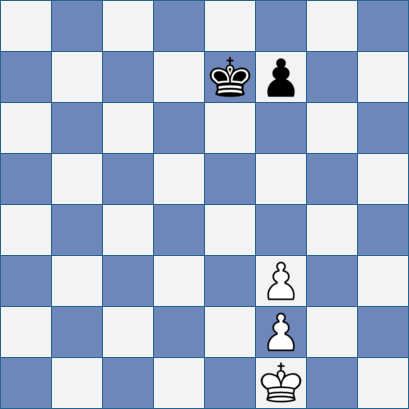
Fischer - Myagmarsuren, Sousse Interzonal 1967


Sousse is a bit different. It comes with a number and another word: Interzonal. I can’t hear or read "Sousse" any more without mentally adding "Interzonal 1967" at the end.

Fischer dropping out, going back and then quitting for good - but playing that game in the King’s Indian Attack against Myagmarsuren before he legged. The tournament may have taken place a year before I was born, but these are the things that come to mind when I hear or read of Sousse. Not that I did hear about the town very often before Friday.


White to play


It seems there was only one king and pawn ending at the Sousse Interzonal. It lasted precisely one and a half moves.

It's not tremendously difficult to evaluate the consequences of trading down. Not even for an average club chesser. I assume, therefore, that the pawn ending only happened at all because Reshevsky was in zeitnot as usual and that it was only on reaching the control after

59 Bxc4 bxc4, 60 Kxc4 Kc6, 61 Kd4

that he found he had time enough to resign.


Sousse? No.

Sousse Interzonal 1967. That’s how it’s been and - some twat with a rifle or otherwise - that’s how it’s going to stay.


King and pawn Index


With thanks to Angus


Saturday, June 27, 2015

Consecutive simultaneous

Brigitta Sinka isn't the only person giving a simultaneous this weekend. Just as he did last year, Jonathan Rowson is doing the same, in Fulham, and S&B blog readers are invited to turn up and play.


It's to raise funds for Brandlehow Primary School, which Jonathan's son attends, and it runs from 11 am to 2 pm. First come first served, though even if all boards are filled Jonathan expects (or hopes) to beat some juniors quickly enough to free some up.

It's five quid a throw for adults, three for kids and "further donations encouraged from those who can afford it". Cupcakes will be available at four for a pound.

Nearest Tube East Putney (District Line) and nearest overground Putney. If you're in London tomorrow, why not give it a go?

Friday, June 26, 2015

Gone missing

Who's Brigitta Sinka? I confess I'd never heard of her until, on my way home from holiday on Tuesday, I picked up a copy of MARCA, Spain's best-selling sports daily. To my surprise, the back page was full of chess, headed by a photo of the aforementioned Brigitta Sinka.


It transpires that Ms Sinka is hoping very shortly to overhaul the world record of 13545 games played in simultaneous displays, a record held by Capablanca, of whom I had previously heard.

This impresses the hellout of me, not leat because the one time I've given a simul, at which time I was approximately half the age Ms Sinka is now, I nearly died of backache.

So, best of luck to Ms Sinka in overhauling Capa's record. There was one odd thing, though, about the story, that puzzled me. What's this about?


Wednesday, June 24, 2015

Lack of practice makes imperfect

I'm actually playing a tournament next month. First time I've played proper chess since last year's British Championships. That's just a week shy of a full year between serious games.

I stopped playing regular chess a few years ago, for a variety of reasons which I won't bother going through here, but while I'm reasonably sure that playing less chess is good for you, it's not quite so good for the standard of your chess. Maybe less so when you're younger - I had a six-year break from serious OTB after 1983, and didn't play noticeably worse when I picked up the thread in 1989 - but when you're fifty it doesn't work like that. Bits go missing. Bits would probably go missing anyway, I know, but without regular practice they go missing all the faster.

I should have spotted this as a problem when [WARNING: A LOT OF BAD CHESS AHEAD] I played Chris Duncan in Penarth in 2012 and the game kicked off like so: 1. d4 d5 2. c4 c6 3. Nf3 Nf6 4. Nc3 dxc4 5. a4 Bf5 6. Nh4 e6 7. Nxf5 exf5 8. e3 Bb4 9. Bxc4. Now, without thinking too much about it, or perhaps without thinking at all, I played 9...Nbd7


which is the kind of error that makes you wonder why you bothered turning up at the board in the first place.

Monday, June 22, 2015

Magnus Carlsen vs Wili Schlage


White to play
Schlage - Ahues, Berlin 1921


So he’s on the way back. Carlsen’s win over Grischuk yesterday wasn’t the most convincing game he's played but I’m sure he’ll give not the slightest of shits about that. This was a case of any win will do. The =1 -3 he’d achieved after four games, with even the draw against Giri feeling more like a half-point lost than a half-point gained, causing uppity bloggers everywhere to ask, "Is this the worst start to a tournament from a World Champion in living memory?"

It’s harsh to have everybody talking about your failures when you’ve achieved so much, but them’s the breaks, I suppose. Still, if there’s a chessical afterlife I suspect there’s a guy who pegged it 75 years ago looking down on events in Norway and sympathising with the Champ.

Friday, June 19, 2015

Chess in Art Postscript: Flirty Glancing, Another Peep

This is the second post of two analysing that chess-in-art which employs a telling look passing between a lady and a gentleman. Last time we inspected A Game of Chess and A Hopeless Case by George Goodwin Kilburne (1839-1924), and pondered the relationship between the two players depicted, and the two paintings themselves. Here is an amusing, if anonymous and undated, pendant.

Playing Chess
European School
Cast your mind back to last time, and compare and contrast.

Wednesday, June 17, 2015

Probably Got Nothing to do with chess XIII


Professor Hayden Zalapek is long-dead to the world, a name forgotten by all who know him. Only as his daughter is dying is he summoned back from his half-life, and brought face-to-face with the grandson he doesn't know.

Or so it says here.


... to do with chess Index

Tuesday, June 16, 2015

Oops


White to play and obtain a lost king and pawn ending
Anand - Carlsen, Norway blitz, June 2015


I know he’s a good general, but is he lucky?

Napoleon, apparently

King and pawn Index


Monday, June 15, 2015

Fifty


Kotov, A, Alexander Alekhine, Batsford, 1975, page 187. (Translation Ken Neat.)

Maybe. For what it's worth my computer doesn't consider the energetic 13...f5 as any better than the move Capablanca played: White just runs the h-pawn forward and then rolls over Black wherever he tries to hide his king.

The player of the White pieces, as you'll have gathered from the clipping, was Alexander Alekhine. The game was played at AVRO 1938 and was the last occasion on which the players were opponents. Capablanca was badly out of sorts over the board: the game was only the second that he ever lost on time. It didn't help that he was quite badly out of sorts physically during the second half of the tournament. Nor did it help that, as Kotov observes, he played this game on the day of his fiftieth birthday.

Friday, June 12, 2015

Chess in Art Postscript: Flirty Glancing

Thanks go to Jonathan B for alerting me some weeks ago to this nice bit of Chess in Art then doing the rounds on Twitter. It is also viewable on this excellent Chess in Art site, which tells us who created it - George Goodwin Kilburne (1839-1924)...


...though not precisely when, nor its size; and, although it must have been painted in the late 19th or early 20th Centuries, the scene depicted is earlier, probably around the 1820s (thanks go to my Every Picture Tells A Story colleague Richard Tillett for this assessment).

My curiosity, like that of the young lady, now aroused (and perhaps the young gentleman, in some part too, as we may see below), a couple of Chess in Art Postscripts ensue. They explore that small sample of chess-in-art wherein someone isn't looking where they ought. One other self-imposed criterion for this selection is that there must be two figures in the picture, one male and one female, and two figures only. If you were to go with the thematic classification of chess art set out by Yves Marek in his magisterial Art Échecs et Mat (2008) (discussed here, et seq), you might file them under Érotisme. And on that note, a warning for readers of a nervous disposition: this post contains adult material.

Wednesday, June 10, 2015

Embarrassment

Obviously it has been overshadowed by the recent and entertaining arrests among the upper echelons of FIFA, but if you follow chess news you'll know by now that there are very serious allegations being made about the Bulgarian Chess Federation. There's a lot of detail, but to cut a longish story shortish I can't really do better than refer you to the summary in Peter Doggers' chess.com report: basically that excessive sums have been claimed under false pretences and then paid into an account in Slovenia which is unknown to the European Chess Union - but which is controlled by a similarly-named entity registered in Delaware.

These allegations represent (to use Chessdom's phrase) "deep trouble" for the president of the Bulgarian Chess Federation and for the president of the European Chess Union in the period to which the allegations relate. Both presidents are the same individual, one Silvio Danailov.

Of course these allegations, although being investigated by Bulgarian prosecutors, remain unproven in any court and the current leadership of the European Chess Union, which is pursuing the allegations, is in the hands of Mr Danailov's enemies.* Nevertheless they represent a serious embarrassment for Mr Danailov.

They also represent a serious embarrassment for the English Chess Federation, which voted heavily to support Mr Danailov when he stood for a second term as President in 2014.


Tuesday, June 09, 2015

History lesson


From ejh, 7 June 2015:

Dear EdExcel

I am a history graduate who writes for a British chess blog and I was naturally interested in the prominence of chess on your GCSE specification. In particular this passage* caught my eye:
Chess has been played throughout the world for over 1,500 years. It was played by many of the famous characters in our History specification including William the Conqueror, King John, Henry VIII and Queen Elizabeth I.
I wondered: what is your reason in each case for stating confidently that these four monarchs all played chess?

Yours

Monday, June 08, 2015

Chess Today


White to play
Houska - Berry, 4NCL 2015


I like Chess Today. In fact I like it enough to more or less forgive it for having become Chess a Few Weeks Ago, some time back.

It’s certainly no fun reading news of Carlsen’s World Championship win after the kind of delay that you would consider a bit poor even for a print magazine. On the upside, there’s plenty of material that’s not time-sensitive and CT chief Alex Baburin seems to be catching up a bit now. The puzzle at the head of today’s blog arrived in my inbox last Friday in what was nominally CT's 11th of May edition. Hopefully we’ll be level pegging in the not too distant future.

Anyhoo, today’s position. White to play. Houska went 32 a4, ended up here five moves later


White to play


at which point she is, according to Chess Today, absolutely lost.

That White is going down seems entirely plausible. Outside Passed Pawns and all that. What’s less obvious - at least to me - is that White has a win in our starting position.


King and pawn Index


Friday, June 05, 2015

Going on a bit too long


Jaws is 40 years old this month. It’s a film that is - according to Mark Kermode - "One of the truly great and lasting classics of American cinema."  It’s a film that is - according to me - too long. It’s a great film, sure, but I’ve got a thing about the length of films.

Most movies - as the younger folk apparently now say - should be about 1 hour 40 minutes long. 1 hour 50 minutes at a push. Two hours is testing my patience. More than two hours is, in nearly every case, a director not doing his or her job.

Jaws lasts a touch over 120 minutes. Spielberg should have binned around 15 of them. Not 15 in a row, but shave a bit off here, lose a scene there and end up cutting around a quarter of an hour from the running time before the Orca leaves out of the harbour taking Quint, Hooper and Brody to their appointment with the Toothy One.

Before you start thinking this is a Probably Got Nothing … post, I’d better explain what going on too long has … to do with chess.


My chess season finished last Monday at 4:30pm. A strange time for a league game to conclude, but that is how it was. It was an unfinished game from a week and a half before. My opponent emailed me at 9:30 on the morning that the resumption was due offering a draw. I didn't pick up the message until late in the afternoon, though.

An adjournment that didn’t even happen and yet still went on too long. That isn’t the point of this post per se although as I come to write it, it kind of feels appropriate that the game, and my season, should end that way.

The chess was not particularly remarkable in itself. It could have been pretty much any of the league games that I’ve played since I began this particular form of entertainment in the late 80s.

What was unusual was that during the game - not before on the way there or afterwards on the way home, but right in the middle of the game - I found myself wondering whether I wouldn’t rather be practicing the piano rather than playing chess. For a good five minute spell I wasn’t thinking about  how to play the White side of a Maroczy Bind,  but was instead wondering whether nigh on thirty years of rushing from work, snatching something to eat and then trying to stay awake long enough to get to the time control might be more than enough.

I’ve thought about quitting loads of times, of course. Before, though, it was always after a bad loss and/or a more than usually extreme bout of chessboard incompetence on my part.

This time it was different. This time it wasn’t about a poor result or mediocre chess, it was simply wanting to be doing something else. This time it wasn’t about quitting the game entirely, it was about not playing league chess any more.

What it was, when all is said and done, was the thought that three decades of playing chess on work day evenings might be a hobby that has gone on a little bit too long.


Wednesday, June 03, 2015

Taxi for Sepp


The view has been expressed that Jack Warner is a cad and a bounder. The FIFA Executive Committee did not notice. I think that demonstrates ... oh this is obviously a preposterous line of defence. I’ll just get me coat.


NB: the photo of Sepp doing one is all over the internets but apparently originates with AFP

Monday, June 01, 2015

BORP? XXXV: Taxi for Stewart Reuben?

The view has been expressed that most of the nominated players are white. The committee did not notice this. I think that demonstrates we are not biased. 
Stewart Reuben, ECF Forum 28th May


The view has been expressed that I have not written a king and pawn ending post today. I did not notice this. I think that demonstrates I am not obtuse and overflowing with self-regard.

Anyhoo, let us imagine for a moment that you, dear reader, are unhappy with this state of affairs. What would happen then? One thing you could do would be to take your chess blog reading custom elsewhere. Decide never to return, perhaps. After all, other chess-themed websites are available.

You would have a choice. You might even - though heaven knows why - decide to read the rest of this post. A post in which it’s the democratic deficit at the heart of the ECF that turns out to be important and Stewart Reuben himself is entirely insignificant. 

Friday, May 29, 2015

War Game 7, County Counting 9, and Brixton Byways 11

In the final episode of this sequence (previously War Game 4, 5 and 6) on chess in World War 2 (it being the 70th anniversary year of the end of the war) we reach 1945.

The re-emergence, in 1943, of OTB county matches was one sign of the beginning of a return to chess normality - in spite of continuing obstacles - and so this episode joins forces with the County Counting thread (the blog series that has been dipping into the historic Surrey County Chess Association Match Books - see them via the History Index). As the focus shifts, and as it comes to settle on Surrey county chess, we will have a pretext for logging those of its chess clubs that survived the war. Thus Brixton CC will crop up, and so the episode will also have a bit of Brixton Byways. 

This episode may end up rather parochial; but first it goes international.

Wednesday, May 27, 2015

DG XXII: The Return of Doctor Akbaraly

Recap:
Last week Mig Greengard was misdescribing a journal article (DG XXI: Doctor Akbaraly) which we’d previously seen him cite in support of a claim that there was "strong evidence of cognitively stimulating evidence" helping with dementia (DG XX: Homework).

Today, we move on to the study’s ...
Akbaraly et al (2009), Leisure Activities and the Risk of Dementia in the Elderly: Results from the Three-City Study, Neurology vol 73 no 11, 854-861
... conclusions. If you’re suspecting that they might not be entirely as advertised by Garry Kasparov’s (Doctor Garry is In) bag carrier (DG XVIII: Mig), you would be correct.

That’s for later, though. Let's start with,
Stimulating leisure activities were found to be significantly associated with a reduced risk of dementia … and Alzheimer (sic) disease
Akbaraly p. 854
That you can see in the Abstract that is available online. Read the article itself (not on the internet and therefore harder to find, but it’s available at the British Library) and you find more details about the results that the researchers obtained.
Stimulating leisure activities were associated with a 50% reduction in risk of dementia in participants with high or moderate levels after controlling for potential confounders. Similar associations were observed for mixed/vascular dementia.
p. 856
Only for "stimulating" activities, though.
For passive and physical leisure activities, no significant association was found between levels of participation and risk of any type of dementia.
p. 856

Ball in the back of the ’strong evidence’ net for Mig, then? Actually, no.

It might seem like an open and shut case that Akbaraly’s article support’s Mig’s claim, but in fact we'll see that it doesn’t. Well see it doesn’t because there’s a difference between 'association' and causation. Well see it doesn’t because of the nature of Alzheimer’s Disease and other dementias and a known research problem.

Aside from anything else, though, we’ll see that the Akbaraly study doesn’t provide "strong evidence" that cognitively stimulating activities help with dementia because Akbaraly and his fellow authors actually say themselves that it doesn't.

Monday, May 25, 2015

Grigoriev versus The Oscars


White to play and win
Grigoriev 1933


Above, a study that I enjoyed failing to solve this weekend

Below, the version that Grigoriev should have created if he wanted to be be in the running for an English Chess Federation King and pawn study of the year award.


Friday, May 22, 2015

War Game 6

This is the third post (earlier episodes are here and here) on chess on the Home Front in World War 2, occasioned by the 70th anniversary of VE day.

The episode starts by continuing with the contribution made by Dr. Tartakover to British chess in the period, It will then examine the controversy concerning the role of the British Chess Federation. Here, again, we are treading on egg-shells. It is a subject that may still inflame passions.

Wednesday, May 20, 2015

DG XXI: Doctor Akbaraly


And we’re back. Have you done yesterday’s homework? I shall be requiring a note from your mother if you haven’t.

No talking at the back. Let us proceed.

We’re looking at this study:-

Akbaraly et al (2009), Leisure Activities and the Risk of Dementia in the Elderly: Results from the Three-City Study,  Neurology vol 73 no 11, 854-861

Specifically we’re looking at Mig referencing it in the midst of a series of tweets earlier this month.

Verghese’s study wasn’t solely about cognitively stimulating hobbies, but a wide range of different leisure activities*. This we know from last year (DG III: Dogs That Don’t Bark; DG VI: Doctor Susan)  and also because you followed the link yesterday to refresh your memories.

In contrast - according to Mig - Akbaraly and his colleagues focused on "mental stim". Which would be fine thing to explore if it were true. Unfortunately it isn’t.

Tuesday, May 19, 2015

DG XX: Homework


With apologies to theblueweasel [see comments to DG XIX from last Thursday], here we go again.

Is the claim that there is "strong evidence cognitively stimulating leisure activities" helps with dementia justified? We’d have to know which particular studies Mig had in mind to come to a conclusion as to whether they supported what he was saying. We could tweet him to inquire, I suppose, but we know that he doesn’t much care for the #askforevidence game so I’m not convinced there’s much to be gained by travelling any further down that road.

Chalk up one more empty assertion from the Kasparov camp and move on, then? No, not this time.


Clearly, one solitary study is never going to be "strong" evidence of anything.  Equally, 'one' is by no means the "many" that Kasparov originally claimed for chess and dementia*. Still, credit to Mig for putting it out there. One article is infinitely better than the zero we’ve had to date so let’s go with it.


Here’s the full reference to the study that you get to if you click on the link in that tweet:-

Akbaraly et al (2009), Leisure Activities and the Risk of Dementia in the Elderly: Results from the Three-City Study,  Neurology vol 73 no 11, 854-861

Unfortunately you’ll only have access to the Abstract. The article itself doesn’t appear to be available online**, which means that you lot have got some homework to do before we can go any further.

If you take yourself off to the British Library you’ll find a copy of the relevant journal in the Medicine and Life Sciences reading room (right-hand side of the building on the second floor). Should getting to St Pancras not be hugely practical, the next best thing is to familiarise yourself with some material which covers similar ground to that explored by Akbaraly and his friends, but which has the added advantage of being accessible at the click of a mouse***.

Verghese et al (2003)****, Leisure Activities and the Risk of Dementia in the Elderly, New England Journal of Medicine, New England Journal of Medicine, volume 348, 2508 - 2516
Hall et al (2009), Cognitive Activities Delay Onset of memory Decline in Persons Who Develop Dementia, Neurology, vol 73 no 5, 356-361 
Hughes et al (2010), Engagement in Reading and Hobbies and Risk of Incident Dementia: The MoVIES Project, American Journal of Alzheimer’s Disease and Other Dementias, vol 25 no 5, 432-438 
Wang et al (2012), Leisure Activities Cognition and Dementia, Biochimica et Biophysica Acta, vol 1822 no 3, 482-491 
Dartigues et al (2013), Playing Board Games, Cognitive Decline and Dementia: a French Population-Based Cohort Study, British Medical Journal Open, vol 3 no 8
Sorman et al (2013), Leisure Activity in Old Age and Risk of Dementia: A 15-Year Prospective Study, Journals of Gerontology, Series B, Psychological Sciences and Social Sciences, vol 69 no 4, 493-501


You may or may not remember the Verghese (DG III: Dogs That Don’t Bark; DG VI: Doctor Susan) and Hall studies (DG IV: After Six Years’ Thought) from last year.  Either way, get reading and we’ll be back tomorrow.


Chess and Dementia Index

Thanks to Matt F and Pablo.


* "cognitively-stimulating leisure activities" and "chess" are obviously not interchangeable terms, but we’ll fight that battle another day.

** which is a drag but hardly Mig’s fault. A lot of academic research is not immediately available to the public, more’s the pity.

*** this is not intended to be an exhaustive list of the available research, but it’s more than enough to get us going.

**** "et al" for those who are not used to looking at academic references, simply means "and other writers". See DG X: Making a Difference for more details about referencing methods.


Monday, May 18, 2015

Grigoriev: Falling at the last hurdle


White to play and win


I nearly made it. The position didn’t look all that difficult so I thought I’d try to solve it in my head. I almost did too. I only tripped up at the last moment.

In truth this is not the hardest king and pawn position we’ve ever had. The first move is not exactly difficult to guess and the core of the problem is a familiar little 'opposition dance’ between the kings.

Which is why I found my way through to the end without too much trouble, I suppose. White must be winning here, I thought. If Black continues this way I’ll go here and it’s over. Black’s only other choice is to go that way and that’s the end too. Except I was wrong.

As it turned out Grigoriev had left one last trap and I had fallen right into it. The position I reached was winning, but the way I wanted to finish off was an outright blunder which allowed Black to escape with a draw.

Oh well, I nearly made it. Nearly is not bad when you’re talking about a Grigoriev study.


Friday, May 15, 2015

War Game 5

Marking the 70th anniversary of VE on 8 May 1945, this short series is looking at British chess between 1939 and 1945 in World War 2, concerning itself with chess on the Home Front. The previous episode started with the early war years at local level, and in this one we move on to look at how organised chess and the armed forces intertwined as the war drew on. Your blogger treads rather nervously as the events, and personalities, are within the living memory of some, and close to the hearts of many.    

By way of a taste of things to come, this is the paragraph in John Poole and Stewart Reuben's hundred year history of the English Chess Federation (up to 2003) on the ECF's website...
"The 1939/45 war years saw very little organised chess; most of the activity was run by the Unions and County organisations. The British Chess Federation was able to support chess in the armed services: it helped the Army Sports Fund and organised matches between the British Forces and Allied Forces in 1941/42, results being 6½-5½ and 6-7 respectively. In 1943 a British Army Championship was held (winner Capt R.H.Newman) and in 1944 an R.A.F Championship (won by F/O E.Brown). The County and District Correspondence Championship and BCF Problem/Composing Tourneys were maintained during these years."

This post will put some meat on several of those bones in relation to chess in the armed forces.

Thursday, May 14, 2015

Doctor Garry XIX: Nullius in Verba

Much like Bruce Forsyth, the Royal Society has a catchphrase: Nullius in verba or 'On the word of nobody’. Science isn’t about assertions on what is right, handed down from authority figures. It’s about clear descriptions of studies, and the results that came from them, followed by an explanation of why they support or refute a given idea.

Ben Goldacre:


How time flies. It’s a year to the day since Doctor Garry was first in. A year and a day since I Am Garry decided that


was a message that he wanted to send out into the world.

Alas for IAG - fortunately for the rest of us - science isn’t about assertions handed down from authority figures. I think you’ll find it’s a bit more complicated than that. If somebody - even an ex-World Chess Champion - says there are "studies" to support their argument it means precisely nothing unless we know what those studies are. Unless we can check for ourselves should we choose so to do.

This is fundamental. It’s a point that Goldacre repeats over and over again in the book of his collected writings.

Science has authority, not because of white coats or titles, but because of precision and transparency: you explain your theory, set out your evidence, and reference the studies that support your case. Other scientists can then read it, see if you’ve fairly represented the evidence, and decide whether the methods of the papers you’ve cited really do produce results that meaningfully support your hypothesis.
ITYFIABMCTT, pg 4


... science isn’t about authoritative utterances from men in white coats, it’s about showing your working.

ITYFIABMCTT, pg 116

Academic papers are filled with ideas and evidence to be read, weighed up, and critically appraised by people with the motivation and skills to do so, whoever they may be. Science is not, and should not be, about arguing from authority. The idea that conclusions of a published paper are automatically true was never helpful. 
ITYFIABMCTT, pg 146

As so often, this is about transparency, which is ultimately the only source of authority in science: we want the methods and result of scientific research to be formally presented, and accessible by all, so that we can see what was done, and what they found. If a government report on anything relies substantially on unpublished and inaccessible research, then we are correctly concerned. 
ITYFIABMCTT, pg 193

science is about clarity and transparency
ITYFIABMCTT, pg 199

It is possible in healthcare to do great harm, while intending to do good, and so medicine thrives on criticism: this is how ideas improve ....
ITYFIABMCTT, pg 251

If science has any credibility, it derives from transparency: when you make a claim about how something works, you provide references to experiments, which describe openly and in full what was done, in enough detail for the experiment to be replicated. You explain what was measured, and how. Then people can freely discuss what they think this all means in the real world. 
ITYFIABMCTT, pg 255

The entirety of science is built on transparency, on giving your evidence and engaging with legitimate criticism. If you hear of a company refusing to hand over the evidence it says it supports its claims - whether it is a drug company, or some dismal cosmetics firm - all you know is that you are being deprived of information, and that vital parts of the picture are missing.
ITYFIABMCTT, pg 256


This is not difficult to understand and conclusions are not difficult to draw. Anybody who doesn’t get it is simply not to be trusted.


And here we are again.  "It's been shown in studies ...." I Am Garry told us just a few weeks ago.

For what it’s worth, the 'potential for distraction is as disruptive as actual distraction' thesis strikes me as more than a little plausible. That I find it so is entirely besides the point. What if I wanted to check? What if I wanted to prove my gut feeling/suspicion/opinion based on personal experience of  two years trying to get some bloody work done at the god-awful LSE Library/etc was actually correct?

What could be less clear, less transparent, more inaccessible than "studies" that are not named? Since it’s impossible to know what research is being referred to here, there is no possible way to discover whether it exists and if it does whether it says what it’s claimed to say. We cannot look it up. We cannot check.

In truth there is nothing here of any substance at all. Nothing but, "believe on my word for I Am Garry."

That, a year on, is where we still are with Garry Kasparov. He implies 'scientific method' but scratch the surface and it turns out that what he’s up to is indistinguishable from the behaviour of a Chessbase bullshitter.


Chess and Dementia Index

Wednesday, May 13, 2015

DG XVIII: Mig (aka #askforevidence)

“Evidence matters. And we should all ask for it. Anyone who wants us to vote for them, believe them or buy their products should expect us as voters, consumers, patients and citizens to ask for evidence ... The launch of this new website means that everyone making a claim is now on notice that they might be asked for the evidence.” 
Dr Chris Peters, Scientific Liaison, Sense About Science (askforevidence.org)

#askforevidence. Because the world is teeming with charlatans, well-meaning simpletons and common or garden bullshitters. The chess world especially so.

The Ask For Evidence campaign isn’t new. It was established back in 2011. It’s got its own twitter hashtag and everything. What is newish is the website that came online last October. A month later it featured an article with the title Help spread the word about Ask for Evidence.


We want to spread the word about the importance of asking for evidence. We want politicians, NGOs, companies and anyone making a claim to expect to be asked for the evidence behind their statements. Here are a few ways you can help. 

If you've seen advice about how to keep yourself healthy, or heard claims about how to reduce crime or improve education, or seen product advertising that you want to know more about - then Ask for Evidence using the site. And let everyone know you're standing up for evidence and holding people to account ...


Not surprising that politicians and health claims are first on those lists. With regard to the latter, accurate information about health matters is vital for everybody (which probably explains why it's of such interest to the aforementioned dodgy geezers, eejits and blowhards).

When asked to justify his dubious unsubstantiated claim about chess and dementia research (Doctor Garry is In), our man merely sub-contracted the work to Leonxto Garcia then went silent. No matter. If Gazza isn’t talking we can always ask his right-hand man Mig Greengard.

Our friend Mig was back on the twitter talking about chess and dementia just a few days ago. More on that in due course. In the meantime,  here’s what he had to say the first time around.

Monday, May 11, 2015

On the Appropriateness of Forgetting


Black to play
Topalov - Kasparov, Linares 2005


I was always going to include this one at some point. The final moves of the final serious game of Kasparov’s chess career. How could you not include them in a series on king and pawn endings?

If I’d thought about it, I’d have done it two Mondays ago (when I did BORP? XXXII instead) to coincide with the Kasparov - Short, "Clash of the Legends" St Louis match. That would have been entirely appropriate. That I didn’t wasn’t a conscious choice. I’d simply forgotten all about Topalov-Kasparov.  By the time Angus reminded me it was much too late to do anything about it.

So this post would have been much more timely a fortnight ago. Still, as it happens, I’m rather glad that I’d forgotten how Kasparov ended his chess career.

Friday, May 08, 2015

War Game 4

Given the other thing going on, it might have slipped your notice that 70 years today, on the 8th May 1945, Victory in Europe was celebrated. The evil of Nazi fascism was defeated. People, my parents included, rejoiced. Six miserable years were over.

From here
To acknowledge this anniversary this sequence of fairly hefty posts is about chess in the war years of 1939 to 1945. It continues the grim theme begun last year of chess in war (earlier posts are accessible via our History Index), and is limited, in the main, to the "Home Front". The posts are the result of a little research in the British chess magazines of the time in the British Library, but do not claim to be comprehensive (they won't cover chess at Bletchley Park, for example, which is well-served elsewhere), nor definitive. As usual: all errors and omissions are down to your blogger - all corrections, especially on historical matters, welcomed. There are still people around who were there.

Thursday, May 07, 2015

BORP? XXXIV: General Election Special Edition


Zeitnot. If only there were  time enough to write a full, Representation of the People Act-friendly, post for today.

Alas there is not. So let’s cut it down to the bare bones.


Sense About Science


... while offenders may not look fierce, there is nearly always something strange about their appearance. It can even be said that each type of crime is committed by men with particular physiognomic characteristics, such as lack of a beard or an abundance of hair; this may explain why the overall appearance is neither delicate nor pleasant. 

In general, thieves are notable for their expressive faces and manual dexterity, small wandering eyes that are often oblique in form, thick and close eyebrows, distorted or squashed noses, thin beards and hair, and sloping foreheads ... Rapists, however, nearly always have sparkling eyes, delicate features, and swollen lips and eyelids ... Pederasts are often distinguished by a feminine elegance of the hair ...

Nearly all criminals have jug ears, thick hair, thin beards, pronounced sinuses, and broad cheekbones.


The idea that criminals are different - different, that is, to the good guys like you and me - was first put forward in a coherent systematic manner by 'the father of criminology’ Cesare Lombroso. Originally published in the 1870s, I think it’s fair to say L'uomo delinquente has not aged well. The idea of 'the criminal' as a distinct 'other' - be it in terms of physical appearance or personality type - has long since been debunked. Although it appears that not everybody received that particular memo.


So,


There are certain problems that a think-tank of Grandmasters might attack, like ... trends in crime ... the kind of brain that can play chess well in early youth is also supremely well equipped to act as a commentator, editor, thinker, about political, social, national and international issues.
R.D. Keene, Chess November 1990


... chess brilliance has nothing to do with high intelligence in other areas, but tends to give top players a false idea of their own high intelligence. They equate their FIDE rating with their IQ. In fact they have devoted so much time to chess that they may not be so brilliant at other things.
Sarah Hurst, Kingpin


Put grandmasters in charge or put them in their place? Vote now.


BORP? Index

Wednesday, May 06, 2015

This is not a folk song IV

This should hopefully be the last in our present series pertaining to the disastrous English Seniors Championship of 2014, the role of the English Chess Federation in dealing (or rather, not dealing) with the subsequent complaint and - in passing - the organisation's bizarre insistence on setting up an unwanted internet forum in order to try and close down an already-existing one.

But first, some satire.


- - -

You'll recall from last week that trying to trace decisions relating to the Sunningdale Park tournament, or for that matter the creation of the "official" forum, in the ECF Board minutes, has proven none too easy. You seek and you do not find. Both affairs are, however, mentioned in the report to the October 2014 Annual General Meeting of Angus French*, then a Non-Executive Director.

Monday, May 04, 2015

Bank Holiday Monday


White to play


I am unwell.  Not in the Jeffrey Bernard 'pissed in a ditch' kind of a way and not in any kind of serious way, but unwell nonetheless. Unwell enough to not really feel like writing the post that I was going to write for today.

So I’m not going to. Here’s a simple position instead.

White to play. With best play should it be a win or can black hold the draw?


King and pawn Index

Friday, May 01, 2015

This is not a folk song III

You'll recall from the original posting that what first sparked my interest in the Sunningdale fiasco was a forum comment - indeed, a (later rescinded) resignation - from the ECF's Commercial Director, of which the part below was the part that struck me most.


In the English Chess Federation Handbook for August 2013 there's a section (begins page 55) on the "financial bye laws" governing the conduct of ECF officials in financial matters. This has a potentially relevant* section F5


and another potentially relevant section F8, on the Bids Regulations.


The Bids Regulations, on which this posting will concentrate, are just lower down in the same document (page 58) or are available separately here. (So far as I can see there's no difference in the wording of the two sources although the points are numbered differently. Reproductions are from the separate version.)