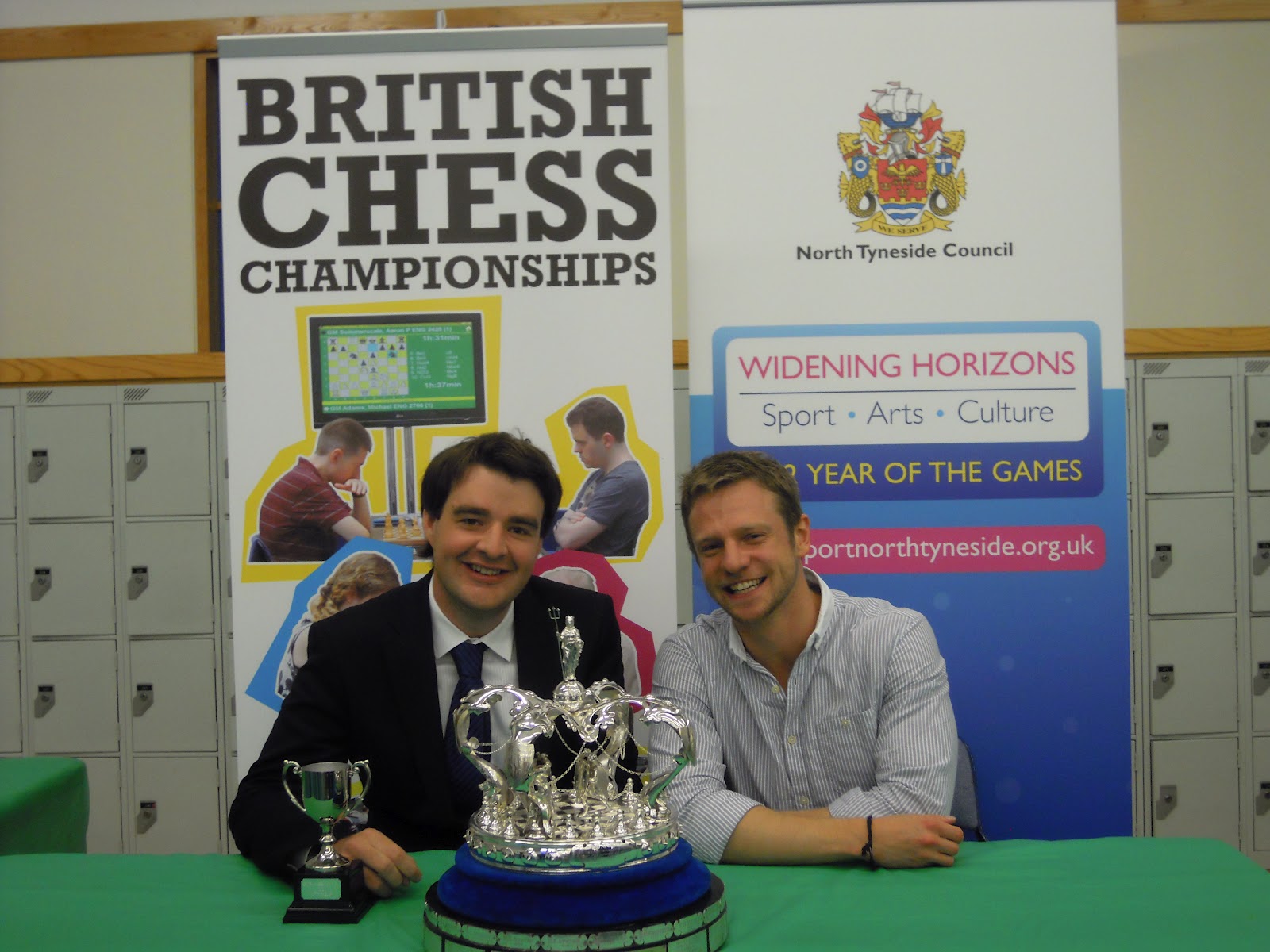
Saturday, August 11, 2012

Streatham Strolls 3

Hello again, and welcome to Part 3 of our virtual chess history tour of Streatham and surrounds, accompanied by Tim Harding's Eminent Victorian Chess Players, and other useful guides.
If you have joined us for the first time, you can catch up by hurrying through the first two sections here and here. In the meantime the rest of us will continue gently southwards, past Brockwell Park, which sports, as does Tooting Common (see part 1), an art-deco open-air Lido.


Brockwell Lido in 1938.
Wikipedia Commons
Cool.

Our first stop today, Number 13 in the Stroll overall, is Deronda Road, just beyond the Park.

In 1891 Rudolf Loman “teacher of music” lived here, at house number 49, with his wife, two-year old daughter, and a domestic (I'll spare you a picture as it looks like any of the other Victorian terraced houses we've seen already - though this one has an attic room for the maid).

“Teacher of music” isn’t the half of it. A Dutchman, Loman (1861-1932) was the subject of an appreciative article, with portrait below, in the BCM in 1892 - he had been in London for almost ten years - which noted his substantial record in tournaments in Holland and England.
Loman was also an organist at the Dutch Church, Austin Friars, in the City and was regarded highly enough to play at the service for the birth of Queen Juliana of the Netherlands in 1909; he had himself been married there in 1907 (OU). He was also a professional concert pianist, having entertained the troops with a piano solo in the musical interlude at the 1895 Hastings Tournament (at any rate a Mr Lohman [sic] did), and here is his programme for a concert at the Steinway Halls in 1899 (click on to enlarge).Chess-wise he had won several national competitions and was to become the official Dutch National Champion in 1912, and on this side of the North Sea the talented Mr Loman was a smooth operator in the London chess divans. Hans Ree re-tells the story of Rudolf, at the turn of the century, coaching another strong Dutchman, Jacques Davidson, 29 years his junior, in the dark arts of relieving monied English gents of their one shilling stakes. The trick was to lose the odd game - about one in five, and always the last – to gull the victim into coming back for more, so that overall they’d leave with less.

Constantly back and forth Loman was to return permanently to Holland in 1915, his tournament record stretching on to 1930 shortly before his death. Not for the first time, or last, on our stroll there is a Gunsbergian quasi-coincidence. Isidor, too, lived in Deronda Road, at number 19; although not until 1923 (TH). He was also close by in 1911, in Knollys Road only a mile away, but by then Loman had moved to Hampstead, north of the river, according to that year’s census (see note).

Now we go from an urbane, cosmopolitan Dutchman to the other end of the spectrum: a demure English lady from the provinces, "careful and...patient in play" (EW/BCM). We’ll meet her on the other side of Tulse Hill.

To our more energetic readers we now offer the opportunity of a long detour east, via, if you wish, a gem in the Palladian style: Dulwich Picture Gallery, although alas it has no chess paintings. Camille Pissarro’s 1871 work Lordship Lane Station, Dulwich is not there, either. It's in the Courtauld Gallery, but let’s have a look at it anyway as it perfectly conveys the contemporary flavour of these South London not-yet-suburbs, i.e. rural, with the railway paving the way for the Victorian terraces that engulf the scene over the next couple of decades or so.


Camille Pissarro (1830-1903)
Lordship Lane Station, Dulwich (1871)
Courtauld Gallery, London.

WikiPaintings
As for the destination of this detour: it’s to Lewisham, for an encounter with the “Black Death”, Joseph Blackburne (1841-1924) the 7th of Tom Harding’s EVCPs. He lived in Sandrock Road near to Lewisham town centre and was buried, with his wife, in Brockley and Ladywell Cemetery (TH EVCPs) at Stop 14. You may not fancy this side-track but, as suggested above, there are some interesting sights on the way. Personally I would prefer to leave Blackburne for another day as (a) there is another big beast to deal with further on in our itinerary, and (b) it's rather a long walk to Lewisham.

Beyond Tulse Hill we pass close to Knollys Road (we won’t stop to look now, as you can see it here), along the High Street, its Victorian façades suffering the ravages of the 20th and 21st Centuries, past West Norwood Library (mentioned again later), and eventually on to the top of Knights Hill. As you pause for breath on the climb you could be forgiven for complaining that as well as the plentiful green spaces mentioned in Stroll 1, South London also has rather a lot of hills. And that Knights Hill is a bit dull.

At the summit, and Stop 15, is the British Home for Incurables (as it was called then, jarring as it sounds to us now). And it was here that Mary Rudge lived out the final years of her life from 1913 to 1919 (she was moved to Guy's Hospital for her last weeks, aged 77 - see note). Mary, who won the first International Women’s Chess Tournament in 1897 in London, deserves to be fêted as she was, at her peak, “the leading lady player in the world” (CCC 1889).

Mary Rudge (1842-1919)
From Scientific American Supplement, 8 June 1878.
Chess Archaeology
She was born in Leominster in Herefordshire, but lived mainly in Bristol, and sometime in Dublin, her association with Streatham coming only in her last years. Her late peak in chess strength was followed by misfortune. Support came from the chess community, including the redoubtable Mrs. Frideswide Rowland among others. Stricken with arthritis, her time ran out while seeking respite in the heights of Upper Norwood, high above the smog of teeming London in the distance.

Mary Rudge's story is well-told by John Richards of Bristol Chess Club here, and Dr Tim Harding has prepared an entry in the Oxford Dictionary of National Biography (along with Gunsberg, and Captain William "Gambit" Evans).

Now let’s pause again, a few hundred yards down the road, to gather our strength and to enjoy the Rookery, a delightful public garden laid out 100 years ago (perhaps Mary sat here, too, re-living past glories). Its spring was said, back in the mid 1600s, to be three times more efficacious than those at Epsom, and accordingly the congested hordes made their excursions up from the city to take the waters. That's against the bylaws now, of course; but it was already polluted by the 1700s. However, another stream at the "Streatham Spa" down in Valley Road, was still healthily gurgling away in the 1930's, bottled and delivered with Victorian-style efficiency by Curtis and Dumbrill's dairy, along with the milk.
From the chess remembered hills of the Norwood Streatham borders we go down now to the bottom of the Common and the chance for another optional detour (for a good mile or so) along lowland Streatham Vale to the Streatham Park Cemetery where Isidor Gunsberg (him again) was buried in 1930 (Stop 16). The site is mapped and the precise spot can be located on the turf, but otherwise no trace of his grave remains (see also TH EVCPs).


The plot thickens.
In the foreground is the empty location of Gunsberg's grave.
Streatham Vale Cemetery. #8478, in square 6.
Now north, and on to Stop 17: a séance with Aleister “The Beast” Crowley (1875-1947) at Polworth Road, secreted behind the war memorial. It feels unseemly, at this moment in our stroll, to mention this licentious, self-aggrandising charlatan, so we’ll confine our attention to his chess, for which, yes, he found the time amid all his black magicking.

He learnt the game when eight years old, and in his twenties, up at Cambridge, was taken to visit H. E. Atkins, no less, and tried to catch him out with a home-brewed line of the Muzio Gambit. It’s all there in his “Confessions”, naturally. He would have you believe that he could handle himself at the board, not needing to call on help from, as it were, the other side. This essay on his chess by Robert Tuohey exposes all.

Crowley mentions his brief childhood stay in Streatham in his self-serving autobiography; it must have been around 1891, when he was 16. He also attended school here – possibly Immanuel (demolished). One November 5th he made his own fireworks and pretty nearly killed himself (I ask you: what will some people do to be at the centre of attention?).

We are definitely heading north now, up Streatham High Street and into the home straight. But if you need some refreshment try the White Lion at Stop 18.

The 21st century accretions (it's now a "backpackers hostel and music bar") cannot disguise that this was once a proud Victorian roadhouse. It would have offered a welcome to passing trade, tasty lunches for the locals, a banqueting room for newly-weds, and last but not least a meeting place for guilds, lodges and - a clue - clubs.

It is in fact steeped in chess history, as this press cutting from the 1929 reveals.


It was home to Streatham and (later-amalgamated) Brixton chess club for over 40 years. This, together with other historical press cuttings, was published in the club's magazine Knightmare! that took the chess world by storm with three issues in the late 1970s (watch out for a blog series to come).

We are almost there - with a final mention of Tim Harding's Eminent Victorian Chess Players, and the subject of Chapter 2: Howard Staunton (1810-1874). He lived at 2 Leigham Avenue, off the High Street, in the late 1850s. He regarded it as his “country home” – unrecognisable today as six lanes of traffic slice the community in two. The High Street can claim, with all due modesty, to be Britain's Worst Street 2002, though they've tried to spruce it up since.

Of all the EVCPs perhaps Staunton’s name is the best known today, so we’ll leave him with just that brief reference (his house no longer exists anyway), and give the last word to a contemporary and thriving chess group at Streatham Library (Stop 19).

It is a self-started semi-detached associate of S&BCC. It meets regularly at Streatham Library (see bottom left in the composite below) which was built by virtue of the philanthropy of Sir Henry Tate (1819-1899), sugar refiner and benefactor of West Norwood Library (top left), the Tate Library in Brixton (top right), and many other improving institutions, including of course the Tate Gallery on Millbank. He installed himself in a saccharine pastiche of his own confection: Park Hill, at the top of Streatham Common (bottom right).

Tate Suite
The Library chessers have been going for maybe six or seven years. They meet at 4.00pm on Wednesday afternoons offering casual games and, for aspiring players, a stepping-stone into the world of local league and competitive chess under the umbrella of S&BCC.

That’s it. We've made it.
I hope you have enjoyed this three-part chess ramble around the chess-rich highways and byways of Streatham. It has been a long haul, but en route we have not let our enthusiasm be dampened by longueurs, Olympic road closures, or dodgy “Keep Off” notices. Thanks to everyone who has willingly helped us along our way.

There is unfinished business, and new directions, to explore, and I hope you’ll come along again for another outing, soon.

Please follow the map a few hundred yards more to Wood Green Tennis Club where we started out two weeks ago.

Acknowledgements , notes etc., and sources not otherwise linked in the post.
OU indicates information kindly furnished by Olimpiu Urcan.
TH and/or EVCPs indicates Tim Harding's Eminent Victorian Chess Players 2012 MacFarland & Co.
EW CN indicates Edward Winter's Chess Notes.
On Loman
The Hastings 1895 tournament book is downloadable from Chessville, where there are some other useful historical items, including the 1892 BCM. Mr Lohman's recital was on August 15 1895.
For Loman's marriage see Chess Notes 7612 from info. sourced by Olimpiu Urcan.
Loman's census records show him: lodging at 121 Upper Bridge Road in Dorking in 1901; as Head of household, at 36B Heath Street, Hampstead in 1911.
Loman 1899 concert programme is in the British Library: Steinway Hall Concerts, ref e.1402.b.(3.)
On Rudge
Thanks to Tim Harding for the nudge to Miss Rudge in Streatham.
EW/BCM is Edward Winter's Chess Facts and Fables (McFarland 2006) quoting British Chess Magazine August 1897.
Her hospital admission details are in the Lambeth Archives, ref IV/266/4/1/15 page 168. The date of transfer to Guy's was 7 (or 14)/11/19 ("14" appears to be overwritten with "7"). She died 22/11/1919
CCC is Colombia Chess Chronicle, 1st November 1889, given by John Richards referring to EW CN 3281.
Others
"West Norwood" (formerly known as "Lower Norwood" ) is where "An Irish Champion" , the Rev.G.A. MacDonnell, was an acting curate in 1872. EVCPs p.146.
Note another Gunsberg coincidence, albeit not one to celebrate: the tragic Vera Menchik and family (Stroll 2) were cremated (on 4 July 1944) in the Streatham Vale Crematorium (these days Vale is omitted) adjacent to the Streatham Park Cemetery where IG was buried. VM info originating from OU and Leonard Barden, reported in EW CN 7711.
Thanks to Don Harper for the Rookery centenary tip, and Angus French for Crowley.
On Streatham local history, see Ideal Homes: Suburbia in Focus, and including Crowley here. The Polworth Road detail is here.
Knightmare! is viewable on the history page of the Streatham and Brixton Chess Club site.
Staunton in the country comes from EW CN 3979. Morphy visited him in Streatham in 1858 (TH after Lawson's 1976 book on Morphy).
Photos
Tate Library is from L.B. Lambeth; Curtis Dairy and Park Hill from Ideal Homes, above. Others by MS.


Friday, August 10, 2012

Once was enough VII : Chebanenko Slav

[EDIT: There's been a statement by the ECF about the events leading up to the failed CAS case against FIDE. We hope to put together some thoughts on the matter soon, quite likely Sunday. (FURTHER EDIT: or more likely Monday.)]


1.d4 d5 2.c4 c6 3.Nf3 Nf6 4.Nc3 a6

Today is the feast day of St Lawrence, San Lorenzo to Spanish-speakers and apparently a native of the city of Osca - to give it the Roman name it possessed in his lifetime. In a story unreliable even by the standards of hagiography, he was supposedly burned on a griddle, a martyrdom commemorated each year by a week's worth of fiestas in Huesca, the modern name for Osca and the city in which I lived from March 2006 until the autumn of 2008.

Wednesday, August 08, 2012

Double Six II

[Author's note: This post was written before Phil's interview with Gawain appeared yesterday. Save for the closing paragraphs, it remains pretty much as originally intended.]


52 ... Ra4
JMGB v J.D. Turner, Penarth 2012


"The dice fell my way". That was how Gawain Jones tweeted his Championship win.

In the circumstances he could hardly have said otherwise, could he? If you win something and don't make some kind of reference to your luck then, regardless of the circumstances, you risk coming across as rather too impressed with yourself. Winning after tossing your queen in? You'd have to turn self-absorption up to eleven not to acknowledge that you'd been fortunate after that.

It's what we say because social convention demands it, but is it the truth? Is it the whole story? I'm not convinced. Things aren't always so out-of-the-blue random as they first appear and one of my games from Penarth, in which my near 2000 Elo-rated opponent dropped a pawn for no readily apparent reason, shows why.


The position at the top of today's blog comes from my seventh round game in Penarth. White - your humble scribe - is obviously in some danger here, or would have been had Black not played 52 ... Ra4.

In the month since the game was played I've often thought about this position and how my opponent came to play as he did. Possibly he thought he was swapping e5 for my pawn on h2, overlooking that 53 Rxe5 Ra3+ doesn't force my king to the second rank allowing 54 ... Ra2+ and 55 ... Rxh2 because with the e-pawn gone d4 becomes available as an escape route. Maybe. Or maybe he simply forgot the rook was defending the pawn.

Whatever the reason, it's easy to see ... Ra4 as nothing other than an unforced error, as something I simply benefited from without contributing to in any way, as something I was lucky to get. That's how it looks, I know, but I think it's possible to explain the apparently inexplicable, at least in part.

Let's leave aside the fact that we were a few minutes short of five hours into the playing session when my opponent blundered and he might simply have been tired. Similarly, we'll ignore the issue of whether a chesser who prefers to open with the King's Gambit is likely to find a rook ending entirely to his taste. Both of these things contributed to 52 ... Ra4, no doubt, but the factor I'm really interested in today is rather neatly summed up by a paragraph in John Shaw's chapter in Grandmaster versus Amateur.

One of my favourite books is Rook Endings by Smyslov and Levenfish. I have read it from cover to cover several times, so whenever I reach a rook ending I feel I am on home territory; nothing bad can happen to me here. No doubt my confidence is excessive, but I do score well when I reach a technical position.
John Shaw


No help to your blogger


My feelings during the game were rather similar to Shaw's. I've not read Smyslov and Levenfish (yet), but over the last year or so I have spent a fair amount of time brushing up my rook endings. The one in Penarth was obviously rather unpleasant for me - when it began I was a pawn down and had a passive rook - but not for one second did I think I would lose it*. I was convinced that somehow it would work out for me.

Like Shaw I was ludicrously over-confident, but I don't think that hurt me at all. If anything, my absurd positivity was even more helpful than justified optimism would have been.

Do you remember the third World Championship play-off game where Boris Gelfand made his own inexplicable error in a rook ending? Vishy Anand's post-match comments are revealing.

I was extremely surprised by Rh7, because somehow I was hallucinating that I was getting a Vancura. So I found it very funny that you had the same thought, at least from your question to Boris. In fact when I got back to the room, I told the guys. They said: "Nice escape!" and I said "Well, but I'm getting a Vancura," and they said: "No, you're not, you're not getting anything remotely, you're getting a Vancura like three tempi down, forget about it." Only later, when I got back to the hotel, I realized how lucky I'd been. It again strikes me that sometimes, even if you're deluded, it can give you confidence and confidence is the most useful thing in chess.

Vishy was overconfident because he hadn't quite understood the position. I was overconfident because my knowledge of rook endings isn't all that hot. It doesn't matter. The important thing is that we were confident.

Precisely how staying confident and positive helps when you're deep in the mire is worth a post or two in itself, I think. Is it that the opponent picks up on body-language cues and unconsciously downgrades his evaluation of the position? Is it simply that positive thoughts stop you from throwing in the towel and keep you playing long enough to give the other guy a chance to make a blunder? Your guess is probably better than mine.

I've no idea how it works, but I'm convinced that it does. There's a direct link between my absolute certainty that I wasn't going to lose and my opponent's blunder on move 52. Not a causal relationship, perhaps, but a connection. I'm 100% sure of that.


Don't Panic
JMGB v Turner, move 35


Back to Gawain Jones and the British Championship. Reading what he had to say about how his feelings after his monumental blunder in that first play-off game I'm struck by how full of self-belief he sounds.

He's just played what must have been one of the worst moves of his life and yet his conviction that he can actually play the game isn't shaken in the slightest. Can he put up a fight even though he's a queen down? Yes he can. Can he win the Armageddon game? For sure he can - and note, by the way, the implicit assumption that he would win the second game to take the play-off to the decider.

By itself it's not enough to explain Jones' success. Gordon fought hard too turning down a draw in an appalling position in game 2, after all. So, no, Jones' mental toughness wasn't sufficient, but it was absolutely necessary and Gordon's meltdown in game 1 wouldn't have happened without it.

That's why the idea of victory through random good fortune doesn't sit comfortably with me. It's too trite, too easy an explanation. If we really want to get at what happened up in North Shields we've got to understand the emotional resilience of the man who became champion and grasp the fundamental truth that while they could easily have fallen a different way, Jones was rolling dice that he had loaded in his favour.


* I was worried for a moment later in the game, but that's another story.


Book cover
Dice

Tuesday, August 07, 2012

Domestic Bliss

As Jonathan alluded to on Sunday, I live with the new British Champion. I wouldn't want to take all the credit, but our tenancy has coincided with a pretty spectacular period for Gawain.


From left to right, we have the British Championship, the Commonwealth Championship, a cushion, and the ECF Player of the Year trophy. So not only is he crushing, he's popular too. Hot damn.

I caught up with him in the kitchen.


PJM: Congratulations! You've been one of the most recognisable names in English chess since you were very young, but when did becoming British Champion actually become a serious ambition?

GCJ: I think 1994 was the first time I ever played in a British Championships  and I  won my first couple of titles in 1996; the Under 8s and Under 10s. I remember watching the top games excitedly back then and dreaming of joining in at the top level and playing the GMs. From the Isle of Man British in 2005 I thought I had some chance at first, and was disappointed losing in the final round in Liverpool 2008. That was a good opportunity seeing as a few of the top players were missing. However, it's only the past couple of years that I've really focused on the title and taking it seriously. Last year was of course a really strong British and I would have required something really special to finish ahead of Mickey and Nigel. In 2011 I just wanted to play well, but this time I was only interested in first.

PJM: In the first play-off game, what were your emotions after 23. Bh5?
 
GCJ: Dread! After trying so hard all tournament it seemed like I'd given myself such a huge handicap. I'd basically given up on the first play-off game and was just trying to prepare myself for the second game. I was thinking that the Armageddon game was suddenly my only chance. I felt if I could at least put up a bit of resistance then he wouldn't have such a huge psychological advantage in game two.

PJM: What did you say to Ste after the play-off? 
 
GCJ: I apologised. It was a very cruel playoff for Ste after he'd played so well in the tournament, especially considering he's got a full time teaching job these days. It simply came down to nerves and had very little to do with chess anymore. Obviously we both really wanted our first British title and you could see that in the quality of the play-off games.


PJM: Do you feel that the format of the Championship needs revision?
 
Yes. I think the problem is a lack of sponsorship and to make ends meet the organisers have been obliged to allow more players to play in the main Championship at exorbitant prices. I remember when I first played I was roughly 2200 and one of the weakest players in the tournament. This time with that rating I'd have been comfortably been in the top half. A side-effect of this is that the Major Open is practically dying. Very few players competed in it this year as all the usual players could play in the main British this time round.

Personally, I think there are a couple of options. For the top players I'm sure we'd all love an all-play-all format with perhaps the Major Open becoming a qualifier but this would require serious sponsorship. Otherwise, the British should be pruned down to under 50 players, perhaps allow all GMs and IMs to play plus ten qualifying spots scattered around the country around the year. These days it seems every tournament has a qualifying spot; I even saw a 'stars barred' tournament advertising a British spot - how does that make sense?

A gripe that I think virtually all the players have is accelerated pairings. This year we had 64 players over 11 rounds and yet we accelerated for the first three rounds. I've never understood the reason for this and, as I observed at the time, it would mean the top players would have run out of opponents by the final round. Sure enough both David and I played 2200s in the final round as I had already played all the other GMs in the field. The acceleration always seems to make the standings very artificial and takes practically the whole tournament for the players to get back to more or less their correct positions.

I know Malcolm Pein has been advocating lowering the number of rounds so that people only need to take one week off work, which perhaps makes it a better model financially. But it seems a shame as we don't get to play many 11 round tournaments these days.

PJM: As your rating increases, playing in Opens becomes more of a risk. Now that you've achieved the title, will you continue to play in the British?

GCJ: The British is a very special tournament and I'll continue to try and play but yes, it's not so easy to keep your rating intact in Opens, despite what Hikaru [Nakamura] might tweet! It's quite difficult playing tournaments where you have to win every game. I was very pleased with my performance but my expected score was 8½/11 so I only gained five rating points! Playing underrated juniors and needing to score 92% to break even is tough. I hope that next year's 100th anniversary will have all the top players in the country; that would make it very entertaining and ensure I don't have to go for broke in every game.

On a related note, you guys should try and figure out where the players ranked World Nos. 50-150 actually play! We're generally not ranked high enough for the prestigious closed tournaments but playing in Opens where we're expected to score something like 7.5/9 is a good way to drop a lot of rating points.


So now we know that the British Champion is also pretty outspoken. It's good to know that he's happy to represent his fellow professionals.

Monday, August 06, 2012

BORP? XV


Makepeace - Brcar, Pardubice 2012


So, Neo, you're in my opponent's head. You're going to spend 25 minutes working out how to respond to 35. f5+. There are many things to consider, not least our little friend Tinie Tempo.


It's up to you.


35... exf5+


35... Kf7


Blue or Red Pill? Index

Sunday, August 05, 2012

They Got It Up 'Em


Don't Panic!
Gordon - Jones
Play-off (1), British Championship 2012


So it's over and congratulations are due to Gawain Jones. The Corporal: British Champion 2012.

The absence of Adams, McShane and Short or otherwise, it was a tough old tournament. In other years people have won outright with fewer than David Howell's 8.5 points, but that was only good enough for third place in North Shields. +6 =5 -0 against opposition including five GMs and two IMs and never really being in contention for first place? That tells you a lot about this year's Championship.

It was even tougher on Stephen Gordon, of course. Being a queen up in the play-off for the title and not converting is the sort of thing that can haunt you for years and his tournament is one of the 'success that feels like a failure' variety. How many chessers in the country could finish with four out of five against Arkell (GM), Howell (GM), Turner (GM), Gormally (GM) and Hawkins (GM in all but name)? How often does somebody win eight games and not go home with the trophy?


Jonesy snapped at the Staunton Memorial in 2009
(admittedly I was trying to take a picture of Viktor Korchnoi)


What of Jones, though? I doubt you'll find anybody who'll argue that the play-off system is the best of all possible worlds as far as deciding the title is concerned, but it's certainly got a shot at being the least-worst of all the options available. Anyhoo, I rather suspect that 2012 will be remembered as the year the guy won the Championship minus his queen in a rapidplay finish. If that's how it turns out, though, it will be unjust and a great shame.

Take a look at some of the other ways we could have broken the tie. The Champion comes out on top time and again.

  • Result of individual game: Jones 1 Gordon 0 (round 4).
  • Most blacks: Jones 6, Gordon 5.
  • Sum of Progressive Scores: Jones 57.5, Gordon 55.5.

I haven't worked it out, but I bet Sum of Opponents' Scores goes his way too.

Talking of which, we could also examine the strength of the opponents that Jones and Gordon faced. They had five in common (those listed earlier) and they played each other. The other half of Gordon's tournament was games against chessers averaging 2217.2 Elo and 204.2 ECF. That's not an easy ride, for sure, but neither is it quite up there with the guys that Jones played (2300.8 Elo and 213.8 ECF). You can tell that to anybody who tries to argue that Jones was lucky.


My friend and fellow blogger Phil Makepeace
might get to earn himself a few quid by offering to polish this for the next 12 months


So congratulations to the winner and deserved Chess Champion of Britain. To a Roll of Honour that includes Sultan Khan, Golombek, Wade, Barden, Penrose, Keene, Mestel, Speelman, Nunn, Miles, Short and Adams it is quite right that we add the name Gawain Christopher Jones.


Saturday, August 04, 2012

Streatham Strolls 2

We meet again for the second leg of our virtual Streatham chess history stroll, armed with various guides to help us along (principally Tim Harding's Eminent Victorian Chess Players (or EMVCs); other initials are explained in the text or at the end).

On the first leg we ambled from Stop 1 to Stop 7 in a loop starting at Streatham and Brixton Chess Club’s venue in Streatham, via Tooting, up through Balham. We are now on the edge of Clapham Common next to another of Holden’s tube stations - a dead ringer for Tooting Bec station that we saw last time.

Talking of coincidences: we noted one or two previously, and a near-miss to boot; now there’s another one waiting for us just round the corner, at Stop 8.


Isidor Gunsberg seemed to have lived just about everywhere hereabouts at one time or another and, as is evidenced by a letter from the Home Office in 1923 (reproduced in EVCPs), he lived at 14 Honeybrook Road, Balham back in May 1908, a few streets away from today's starting point. Well, déjà and vu, haven’t we been here before? And wasn’t it last summer?

On that occasion we were investigating Broadmoor patient and chess problemist Walter “There Has Been So Much Piffle” Stephens. He too lived in Honeywell Road, Balham, also in the early years of the new century. It’s where he committed the dreadful deed that resulted in his committal to that high-security hospital. He was at number 45 to be precise. But when? Could it be that he and Gunsberg had been living in Honeybrook Road at the same time, bid “Good day” in the street, and bumped into each other in the corner shop?

Alas, probably not. Stephens committed his crime, and was immediately detained, in late August 1905, and from Tim Harding's data (unpublished) Gunsberg moved into Balham just about three weeks later (and before I forget: both 14 and 45 still stand today in their Victorian terraces). But there’s perhaps a more definite crossing of their paths.

Stephens had his “Piffle” letter, and two of his problems, published in the Daily Telegraph on 1 July 1922.
And who was it that edited the Telegraph chess column at the time? Isidor Arthur Gunsberg, that’s who (TH following W/S). It would be nice to think that Isidor, who appears from Tim Harding’s book to have served, albeit some years before, and only briefly, controversial political causes (writing tracts for the wonderfully exotic chesser Wordsworth Donisthorpe (TH)), might have been sympathetic to the expostulations of the Broadmoor Problemist, even if he hadn’t know him personally. Nice to think; impossible to know.

Next we thread our way a mile or so north through the generous avenues of Clapham Park, lined with comfortable semi-detached Victorian villas, we join the hoi polloi in the High Street, and we go on just beyond the railway arches at Clapham North. Here, at Stop 9, we have a rendezvous with a tragic episode in chess history.

On 27 June 1944 a V1 flying bomb fell on 47 Gauden Road SW4 and extinguished the lives of Women's World Champion Vera Menchik (b. 1906), her mother, and her chess-playing sister Olga. Her story has been well told elsewhere, for instance by the West London CC.

It is all the more desolate as Vera had already, in 1939, witnessed the destruction of the National Chess Centre in Oxford Street of which she was custodian, and in 1943 she lost her husband R.H.Stephenson (then Hon. Sec. of the BCF); her own number came up the following year. She was only 38. Wretched times.

An ECF thread reports that efforts to install a Blue Plaque in Gauden Road as long ago as 1962 were frustrated by the obliteration of the building in which the family lived. To be fair to the authorities its undistinguished replacement doesn't seem worthy enough to bear such a poignant commemoration.

At the scene today

Now you now have a choice. If you fancy flogging on up the A3 for ¾ mile to Stockwell and Stop 10, you are more than welcome. If you do: stroll on and imagine the imperious Legions barrelling towards you down the old Roman Road.

"Ubi es Clapham Commonium?"

But don’t, while lost in your reverie, carelessly step off the pavement. Nearly 2,000 years later squadrons of commuting cyclists also expect clear passage on what is now blue cycle Superhighway C7, and they, too, are disinclined to take prisoners.

"Hail Caesar"

When you get to Stockwell find John Ruskin Street off to the right where, before it changed its name from Beresford Street (TH), Johannes Zukertort (Chapter 8 of EVCPs, and in the news again with the splendid restoration of his grave, championed by Stuart Conquest) lived, and died in 1888 aged only 45.

Notice of Zukertort's death in Chess Monthly July 1888
- the magazine he co-edited with Leopold Hoffer.

He had lived at number 187 (original building no longer extant) on the right, half-way along toward the Walworth Road end. Bird then lodged maybe a mile away near to the Elephant & Castle at 5 Heygate Street (HB; original building gone), and as Bird reminisced later (HB), he and the “incomparable” Zukertort spent time, and more, together. Zukertort, now in straightened circumstances, confided in his friend, who subsequently saw to the care of his “two beautiful daughters”. The secretive Zukertort never publicly admitted to a relationship, married or otherwise (TH).

You may prefer to omit the above detour and head eastward for Stop 11 over near Brixton, passing en route Vincent van Gogh's brief domicile (see note). According to the 1871 Census (EW) R. B.Wormald (1834-1876) lived at 11 Angell Road (Stop 11). As with those above, the address has long since been redeveloped, so there's not much to see.

R.B.Wormald
From the Scientific American Supplement in 1877

Wormald gets a walk-on part in EVCPs. He was in the thick of the disputatious Victorian chess scene, attracting Steinitz’s particular opprobrium for carelessly recommending a blunder in his 1875 Chess Openings. Wormald had his supporters, though after 1. e4 e5 2. Nf3 Nf6 3. d4 exd4 4. e5 Ne4 5. Bd3 surely only the most loyal would now play the “perhaps better still” 5…Qe7. His name lives on, in my ancient 13th Edition of MCO anyway, for 5. Qe2 in the main line Ruy Lopez. Against the grain of those buttoned-up times, Wormald indulged a penchant for Queens in original, and maybe compromising, positions.

So we now we go south, and beyond Brixton (in which Prison your blogger briefly played chess) passing by Ruskin Park – a hint of what comes next – to Herne Hill where "The Professor" himself lived (Stop 12). Actually, in London and indeed the whole country, you can’t get away from him. There are over 200 Ruskin Avenues, Closes and whatever, nationwide. In this neck of the London Borough of Southwark, along with Ruskin Park, there comes a Ruskin Walk (once his favoured footpath) and a JR School. We've referred above to the JR Street up beyond Stockwell, and there's a Ruskin Way in Colliers Wood 3 miles south west.

The local interest is explained by a plaque, retiring under a shading tree, just inside the front fence at 26 Herne Hill, SE24.
We won't get waylaid here by Ruskin's prodigious and polymathic outpourings, celebrated on so many street corners, although his compendious writings lit up the intellectual scene, and he even burned brightly as a cigar.

Let's just stick to his chess, but only for a short while as it has been a hard day's strolling. He was a devotee of the game. References to it pepper his writings and correspondence. Bird for example was on the receiving end of 28 (and possibly more) letters from the great man (HB). He also sponsored chess competitions, for which he offered his autographed volumes as the prize (!).

Ruskin was of the Sturm und Drang school and thought the fun went out of a game if the Queens disappeared. "The working out of an end-game is repellent to him", his "preference was for a game compacted of volcanic means to a violent end" said "F.W.L." in BCM. You can assess JR's strength from his comment on this position from a Morphy v Amateur game: "a most lovely game, but I can't do the mate." Ruskin couldn't. Morphy could with his eyes shut. Can you?

White to mate in three.
Morphy v Amateur [1858.03.10 Blindfold simul.]

Many streets may bear Ruskin's name. The local station doesn't and it has remained "Herne Hill", where we'll take another break, and where we'll meet again next time.

Acknowledgments/sources etc.
BCM: British Chess Magazine 1923-1932 An Anthology. John Ruskin and Chess. Article from 1923.
EW: Edward Winter's Chess Notes: The Steinitz-Wormald-MacDonnell Controversy; and John Ruskin and Chess (to which a fellow SBCBlogger contributed a chess-related Ruskin discovery).
HB: Henry Bird Chess History and Reminiscences (downloadable).
TH: Eminent Victorian Chess Players (or EVCPs). Tim Harding. McFarland &Co. 2012.
TH following W/S: Whyld, Ken. ed. Chess Columns: A list (Olomouc: Moravian Chess 2002), Modifed by Alan Smith. (given in TH).
Wormald's 1875 Chess Openings is downloadable from Chessville here.

Picture sources.
Clapham South tube from Wiki. 28 Herne Hill from here. Roman Soldiers from here. Ruskin cigar tin from here.
Superhighway from here. Wormald from here.
Menchik image is edited from BCM of 1931, reproduced in British Chess Magazine, 1923-1932, An Anthology, published by them in 1986.
Zukertort image comes from Chessville's downloadable Chess Monthly Vol IX (1887/8). Stuart Conquest has a nice article in which he teases that Zukertort and Vincent van Gogh's paths may have crossed (as I suppose might VvG's and Wormald's). Vincent lived at 87 Hackford Road, Brixton in 1873/4, where he gets a Blue Plaque.
This and other unattributed pics by MS.

Friday, August 03, 2012

Penarth 2012 : The Worst Move On The Board XII


We have a Worst Move for you from Penarth. But first, let us examine another, from the British Seniors Championship currently in progress in North Shields. (Both this and our Penarth example were drawn to our attention, by Jack Rudd, a competitor in both Penarth and North Shields, albeit not in the Seniors Championship. Jack also provided the previous example in our series.)

The position above appeared in the round three game Tanner-Moore, after 35...Kf6-e6. How did White lose, in the quickest - and may I say the most elegant - way possible? Black, it may interest readers to know, was a joint national champion in 1966.

The answer may be found here.

And so back to Penarth, and the 2012 South Wales International.


Brown-Robinson, round five. Position after 64...Kh5-g4.

Perhaps this is the most forgiveable in the series so far, since White is completely lost, though not lost quite so quickly as he would have been had he played any other move than the one he did.

Nor, indeed, was he lost in practice as quickly as he might have been. For if White found the worst move on the board, we have to tell you that Black did not, in reply, find the best.

But he got there in the end.

[Worst move index]
[Penarth 2012 index]

Thursday, August 02, 2012

No Blog Post Today

There'll be no blog post today. Sorry about that.

I'm not sure what I would have written about had there been one. Another page from our Penarth Diaries, perhaps, or maybe something about the Olympic badminton disqualifications coming on the same day that the leader in the British Championship played 18 moves then packed it in for the afternoon.  One of those two probably.

Whatever it was going to be will have to wait for another day. Still, if I can't write you a post I can at least tell you why it is that you're not going to get one.


I'm going to be all over this just as soon as I get a spare moment


I worked late yesterday. It's far from the sort of thing I'm inclined to do, but sometimes you don't have a choice do you? On this particular occasion I was involved in the early stages of an investigation into whether it was necessary to invoke a procedure known in my trade as the Protection of a Vulnerable Adult.

A couple in their nineties. A person who may or may not have relieved them of a small sum of money and who may or may not have doctored paperwork to cover their tracks. It was, you might imagine, not a particularly pleasant thing to be looking in to and not just because of the natural distaste we feel when it seems possible that members of society who are least able to defend themselves have been exploited.

I say 'possible' because I have no idea what went on. I know something happened, I just don't know what it was. There will be an explanation - although not from me as my role in the affair is now over - but what that turns out to be, muddle or something more worrying, it is impossible to say at this stage.

Since I don't know what will happen, let me tell you what won't. There won't be an investigation into the agency involved and whether they underpay and overwork their staff, let alone whether their recruitment and supervision practices leave anything to be desired. There won't be anybody looking too closely at how Social Services choose the companies that do this kind of work on their behalf nor how much they are paid to do it. Has the council slashed the social care budget? The question won't be asked and neither will anybody be inquiring into the state of the local authority's finances as a whole. Above all else you can rest assured that the butt-fucking of the economy and consequent catastrophic effect on services available to the most sick and vulnerable will be very far from anybody's mind.

It's all rather depressing. A man has been suspended from his job and in due course he will be kicked in the nuts or exonerated/deemed to have acted unwisely (for which we should read 'have been poorly trained', but we won't). Nobody will be drawing the larger circles.

What's the context? Why did this happen? These questions won't be answered. It will all be about this one guy and whether or not he did this thing or that.

Upshot: regardless of how it plays out, the ultimate impact on the well-being of the people with whom I work is going to be as close to bugger all as makes very little odds. Nothing will change and sooner or later we'll be back here again, albeit with some other couple and some other guy.


Where your correspondent wishes he was as he writes these words
(and where, if there were any justice, he would still be by the time you read them)


Which brings us to the ECF and the FIDE legals, but no, I'm not equating anybody within the federation with the person who took up so much of my time yesterday afternoon. The issue is the one of investigation.

As important as it is, resolving precisely how the ECF got itself involved in the FIDE lawsuit is only the presenting problem. There are bigger circles. There's a context to consider.

I'll leave you to ponder what some of these wider questions might be. Personally, amongst other things, I think there's something really important here about communication, about how the English Chess Federation talks with itself and with English chess as a whole. I'd explain further, but unfortunately, as I say, there's not going to be a blog post today. Sorry.


With thanks to Paul Cooksey


bed

Wednesday, August 01, 2012

What are buildings with the people gone?

Hurrah! The Grand Prix is coming to London. Or such was the feeling after the announcement was made* confirming the rumours that had been around for some time, that the leg scheduled for Chelyabinsk would, after a dispute with the organisers there, be moved to London instead.

Fine, I thought: even though it's going to be at Simpson's-in-the-Strand. Or perhaps because it's going to be at Simpson's, since we all know who lives there and hence we were surely in for a treat. Sure enough, in the Agon press release the man himself gives us a glimpse of what may be to come.


That's the Immortal Game, as I am sure Ray knows, not that he's responsible for the typing. (Besides, these things are rushed out and sometimes typos happen: similarly, in "one of the world's most respected commentators on the sport" they may have forgotten to add the "dis".)